The challenge
An SEO audit usually involves a crawler in one tab, a rank tracker in another, Google's own tools in a third, an AI chatbot in a fourth, and a slide deck stitched together at the end. Each tool bills monthly. None of them shares data. The client receives a PDF that took longer to format than the problems took to find.
We wanted one piece of software that could crawl a site, find what is wrong, show where it ranks, explain why in plain English, and hand the client a report, without anyone pasting numbers from one window into another. Nothing on the market did all of that on a desktop, so we built it. This is what software development looks like when the customer is us and the deadline is every Monday's client calls.
What we built
GatorCrawl is a native Windows desktop application, with a command-line version for headless crawls and a background agent that keeps working when the app is closed.
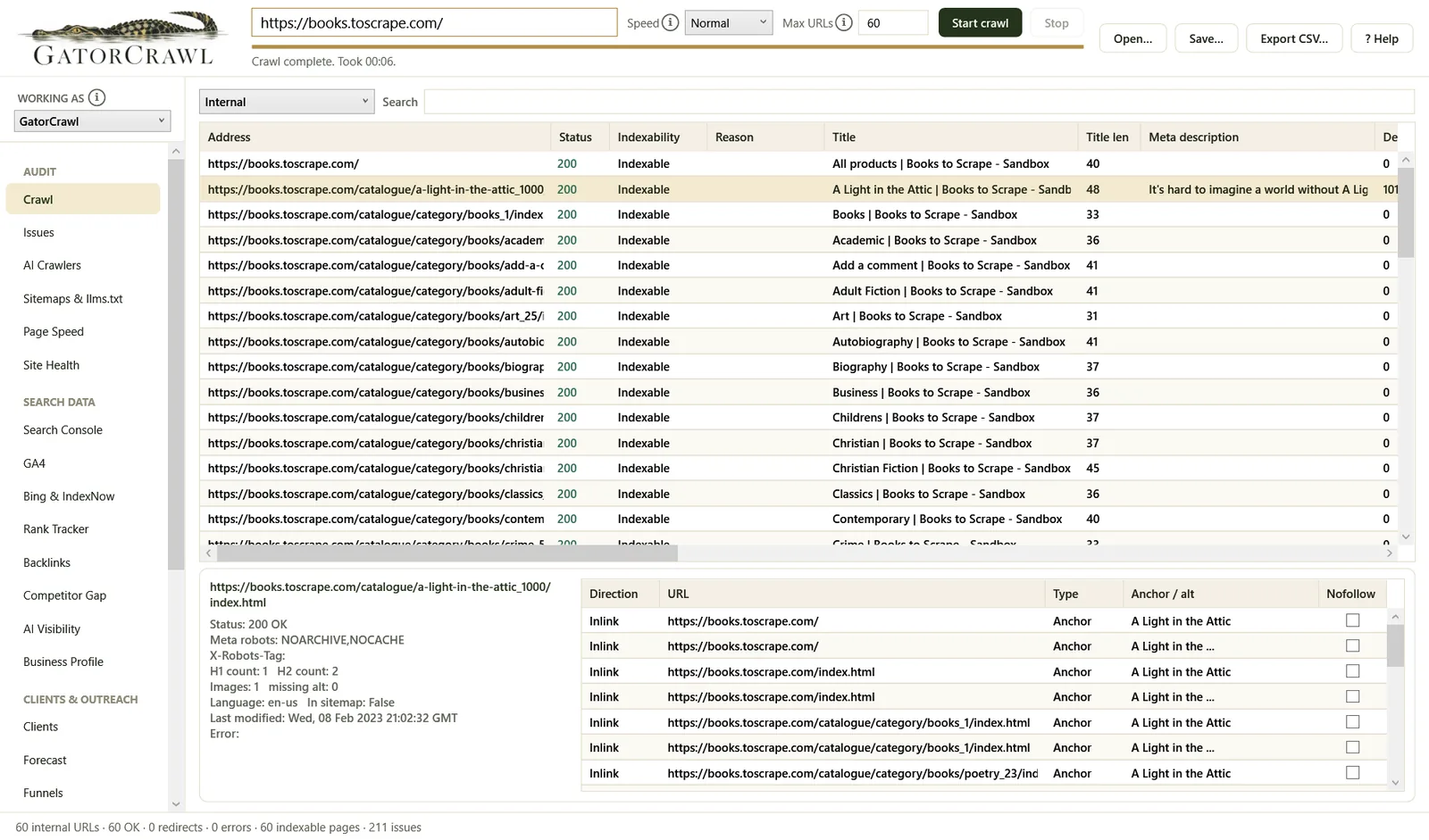
The crawler walks a site breadth-first, records every redirect hop, reads XML sitemaps to find orphan pages, and runs about 35 checks: broken links, redirect chains, noindex and canonical problems, thin and duplicate content, missing alt text, structured data, slow pages, and more. It is polite on purpose. It honors robots.txt and crawl-delay, backs off when a server says it is busy, detects firewall challenges, and stops itself after repeated refusals instead of hammering a site. It identifies itself honestly and does not pretend to be Googlebot. That is what technical SEO should look like from the server's side.
Around the crawler sit the tools an agency actually uses:
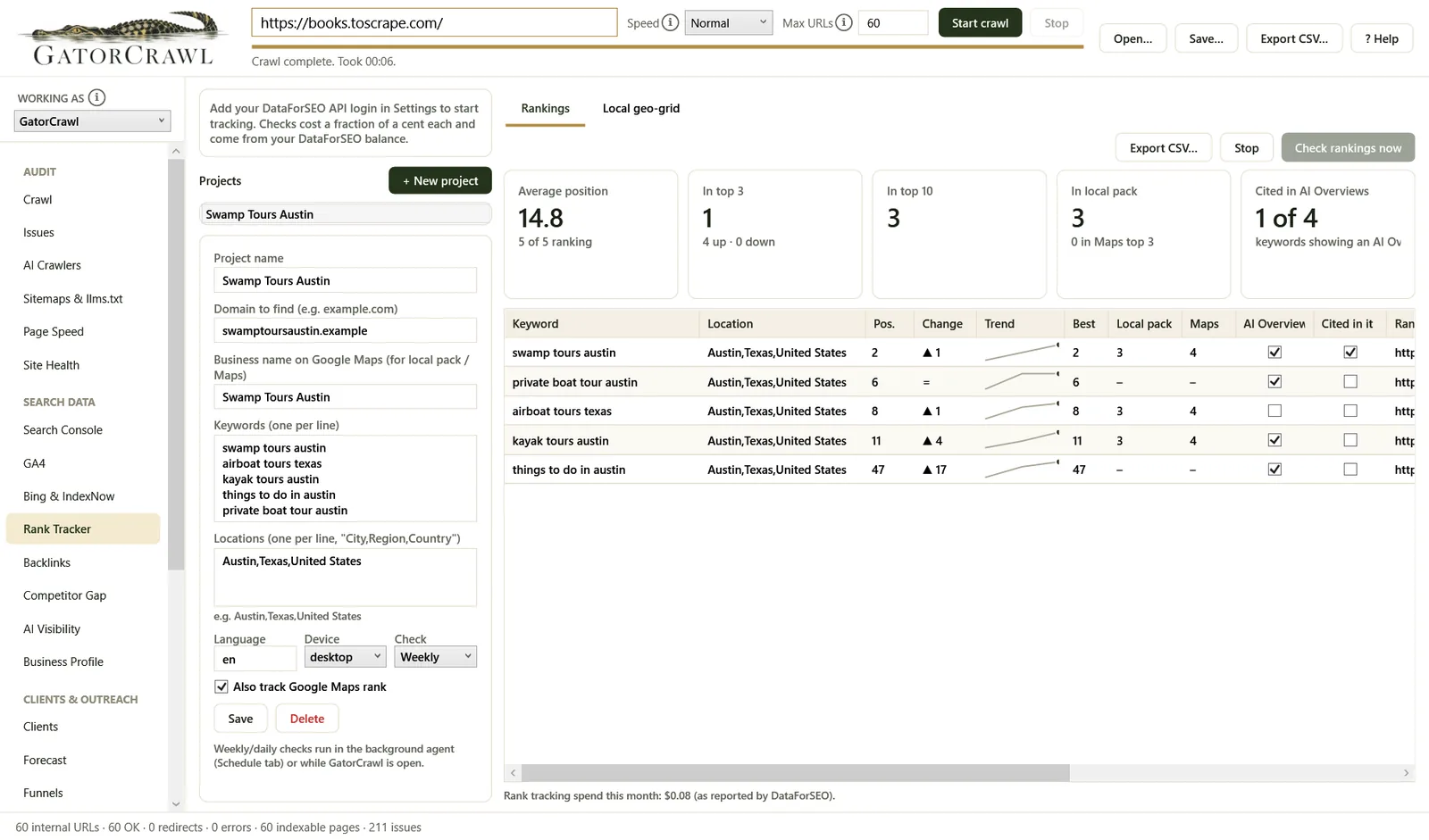
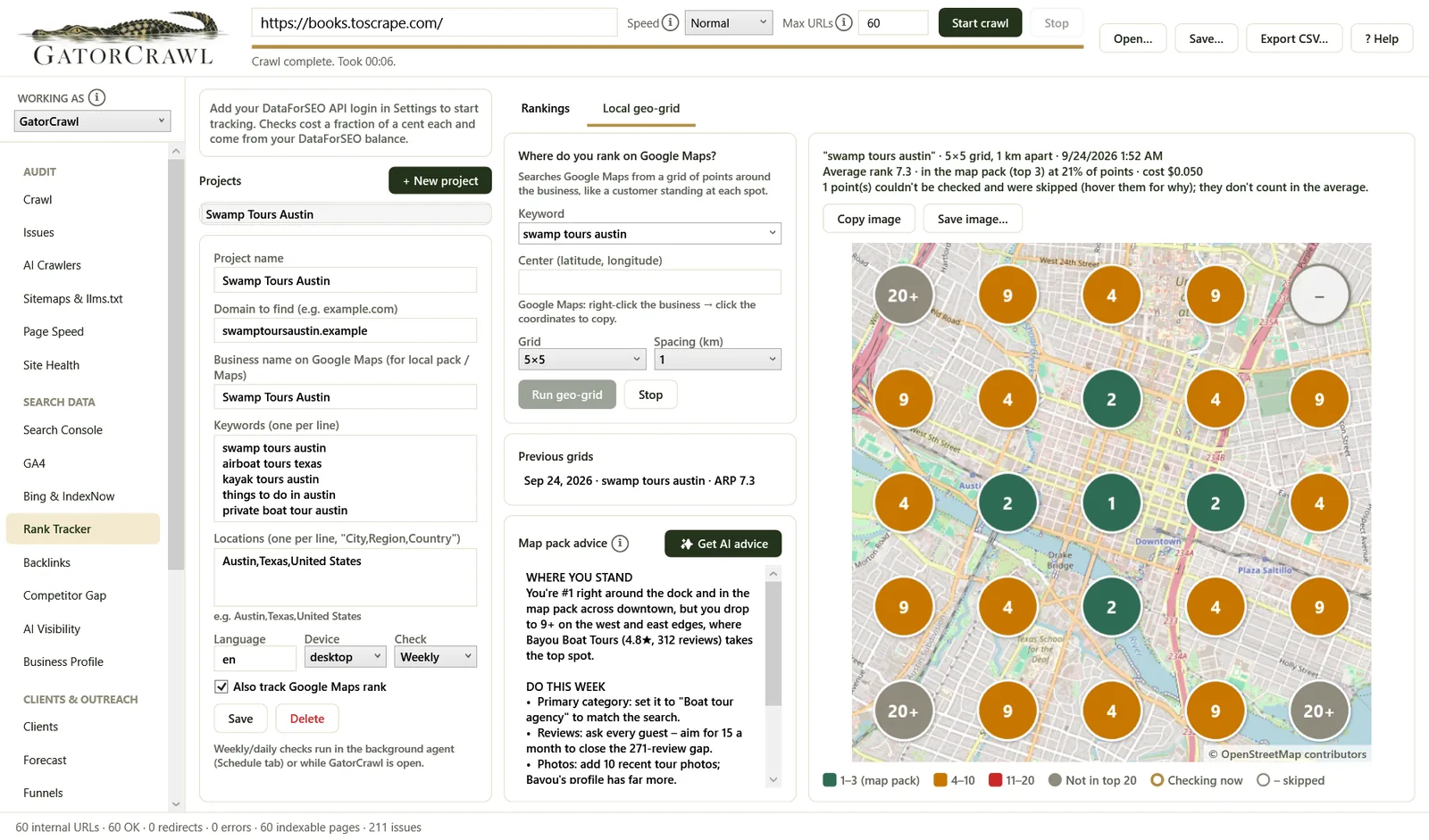
- Rank tracking with a Google Maps geo-grid that shows where a business ranks across a map, not just from one spot. Our guide to how Google Maps ranking works explains why that grid matters.
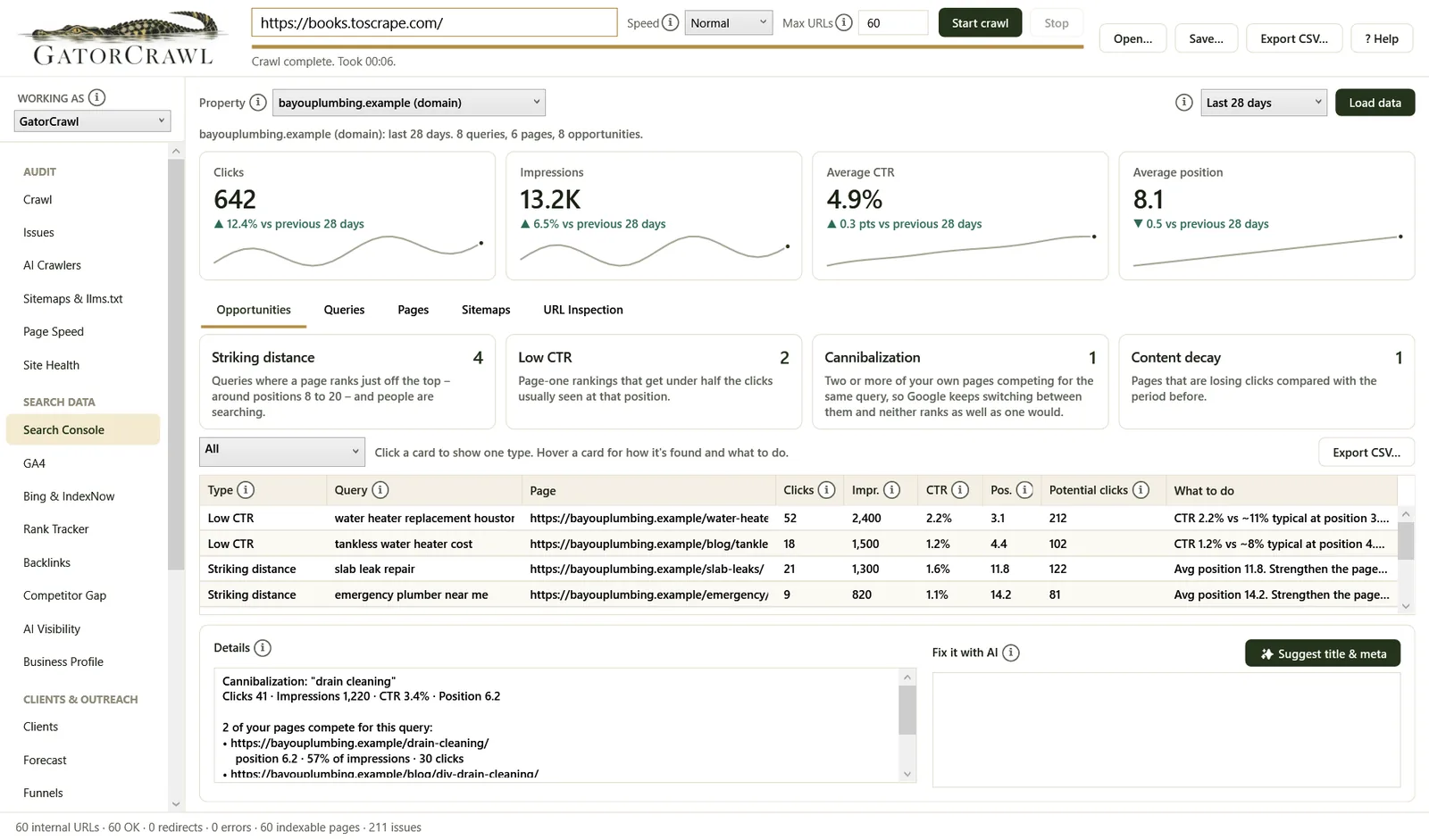
- Search Console and GA4 connections that surface pages close to page one, queries with low click-through, and pages competing with each other.
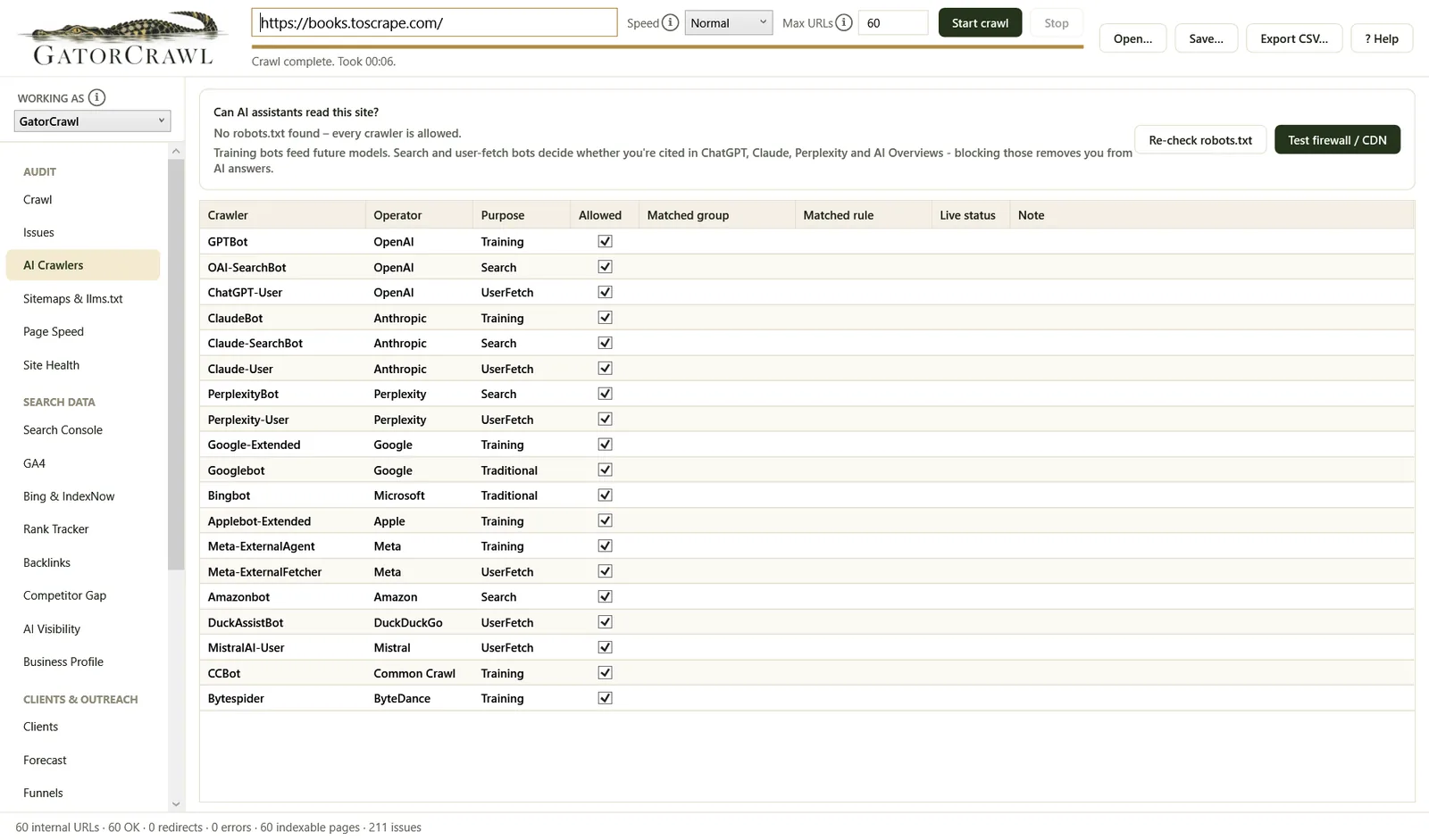
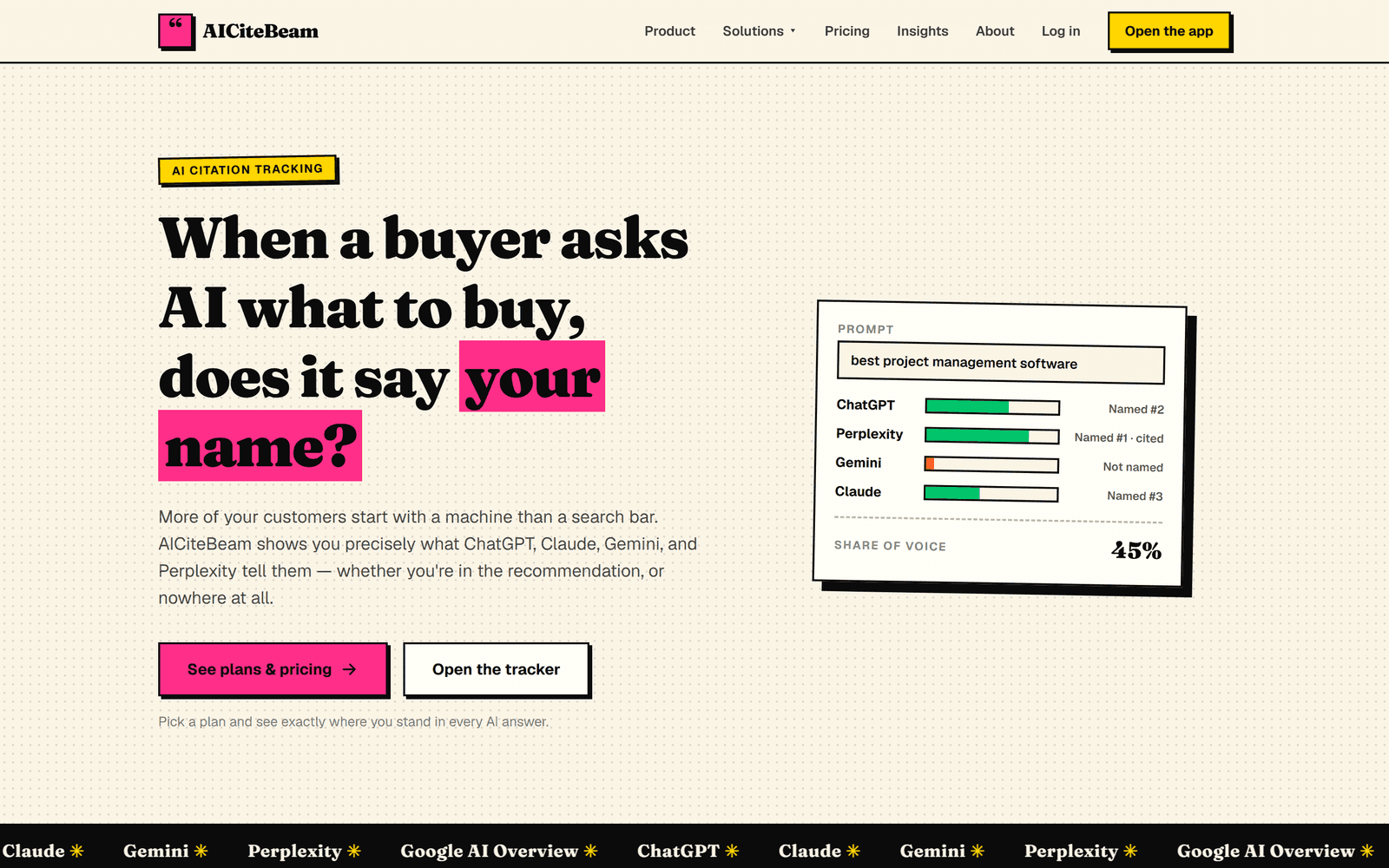
- AI visibility checks that ask AI assistants the questions customers ask and record whether the business is named, plus an AI-crawler audit of robots.txt. More on that in our AI search optimization service.
- An AI gateway that connects to six AI providers, local models included, with a usage and cost ledger so nobody is surprised by the bill.
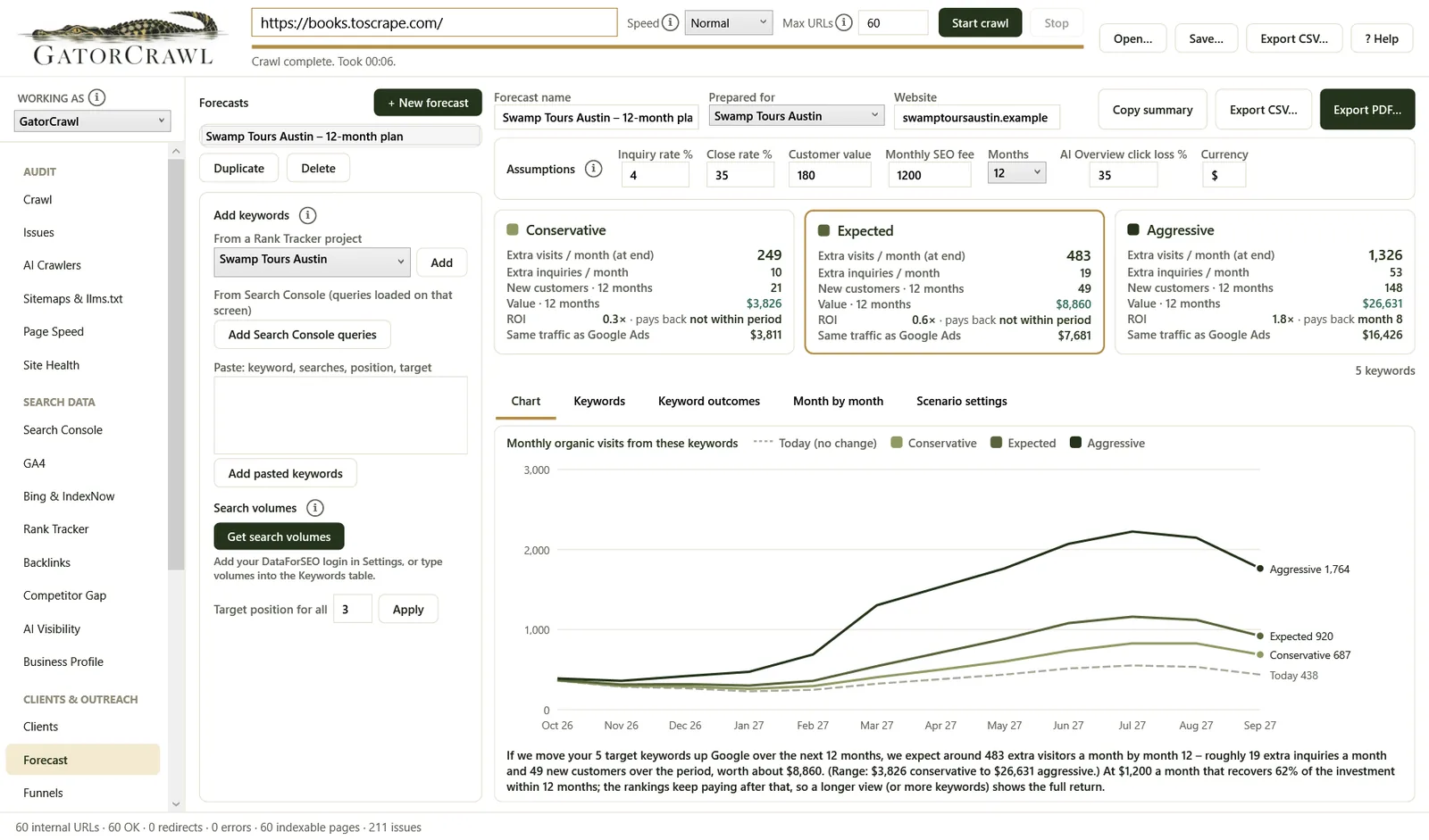
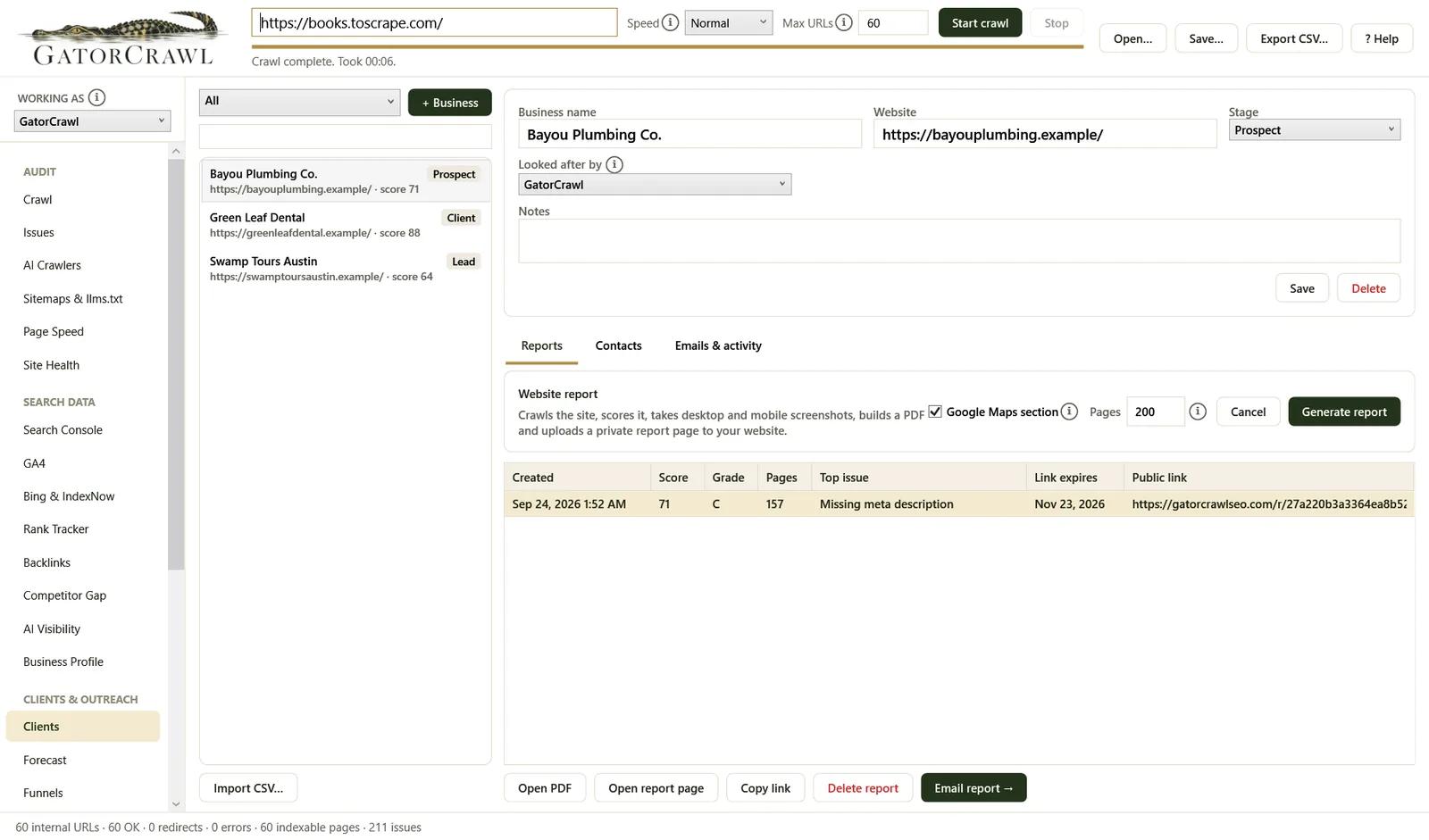
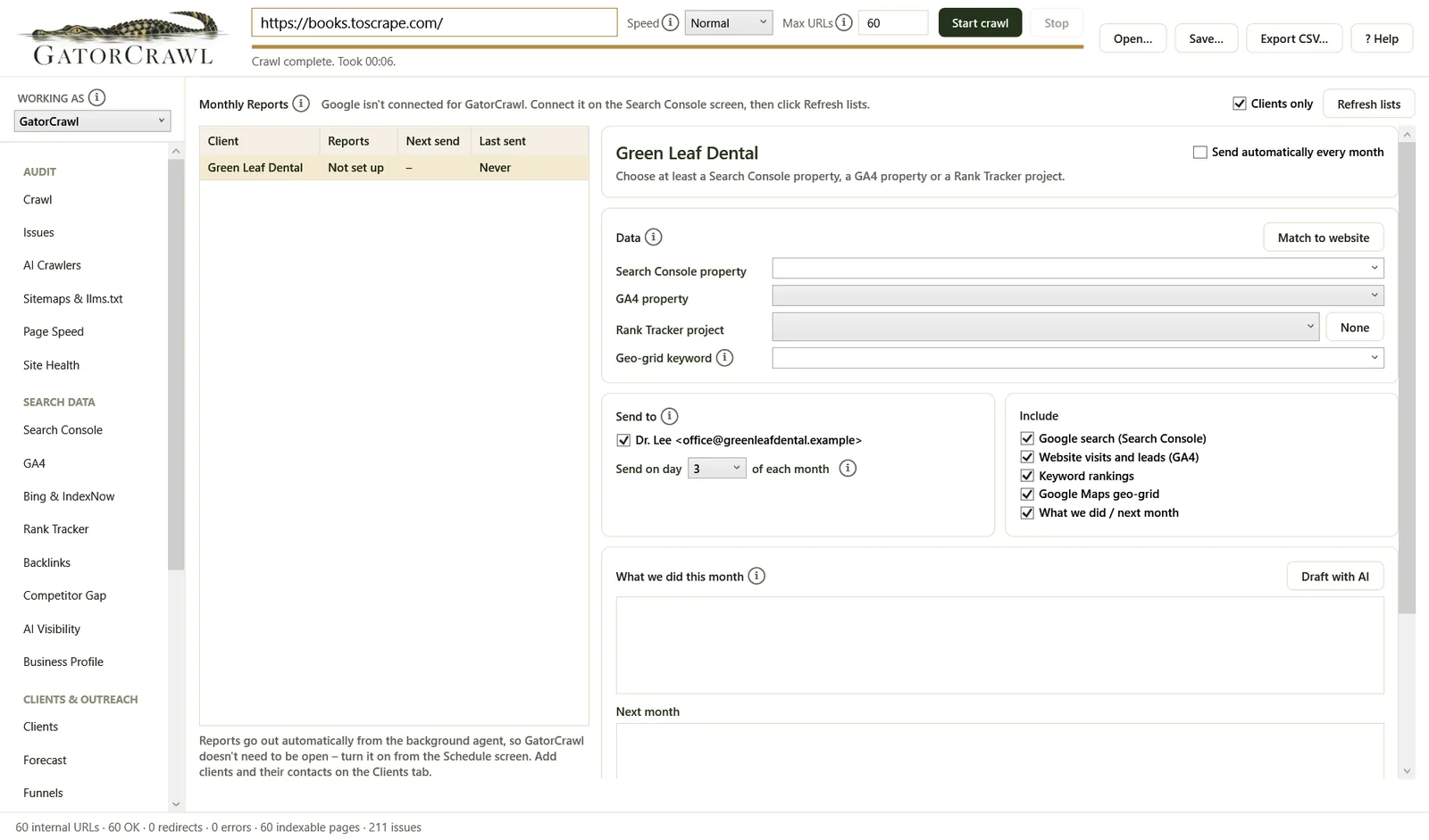
- Client tools: website reports with a score and grade, twelve-month forecasts, proposals, monthly reports, email sequences, and lead tracking.
- Publishing connectors for WordPress, Webflow, Wix, Git-based sites, custom-coded sites, and static hosting, with a calendar and a scheduler.
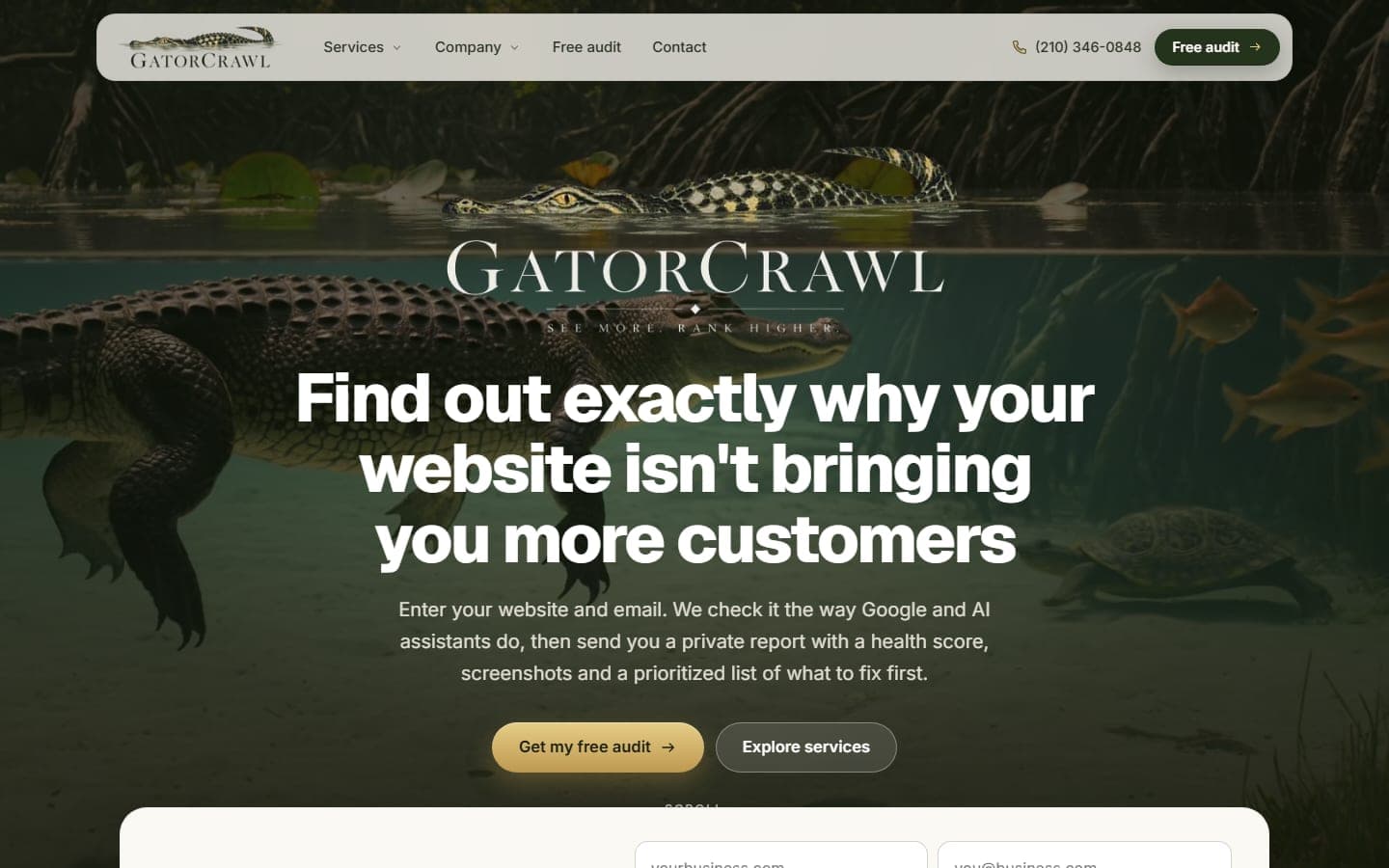
The companion website, gatorcrawlseo.com, is a lightweight, fast-loading site. Enter a website and an email, and it checks the site the way Google and AI assistants do, then sends a private report with a health score, desktop and mobile screenshots, and a prioritized fix list.
Why it works
One source of truth. The crawl that finds a broken page is the same data that goes into the client's report. Nothing is retyped, so nothing is mistyped.
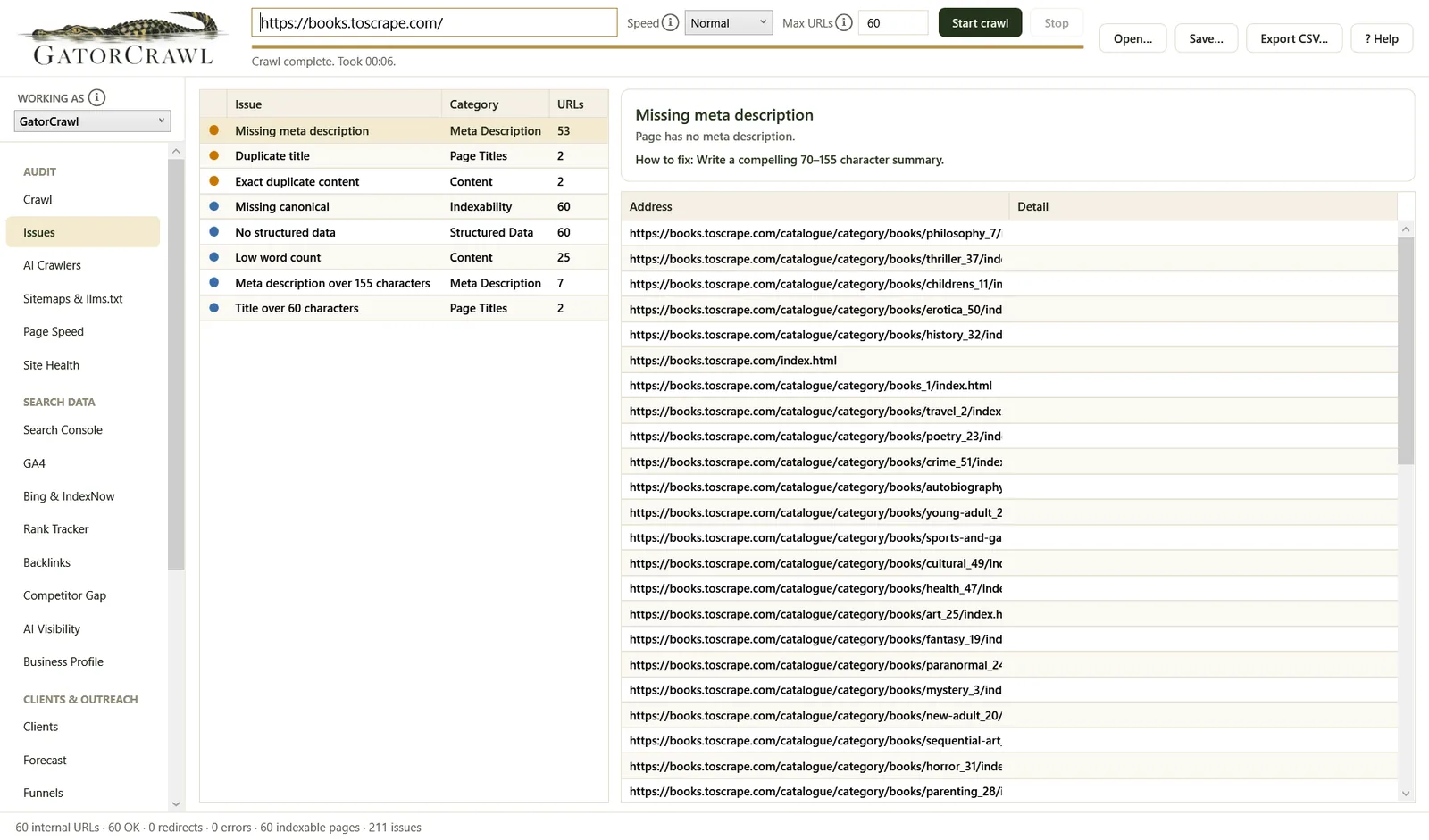
It explains, not just lists. A list of 211 issues is a to-do list nobody finishes. GatorCrawl groups issues, ranks them, and says how to fix each one in a sentence. The forecast turns "rank higher" into "this many extra visits a month, and here is the range."
It respects the sites it touches. Crawlers that ignore robots.txt get blocked, and then they are useless. Polite pacing, honest identification, and an automatic stop keep GatorCrawl welcome on the sites it audits.
Desktop on purpose. Credentials are encrypted on the user's own machine, crawls run at the speed of their connection, and there is no per-seat cloud bill for work a laptop can do.
What's on the site
- A free audit form on gatorcrawlseo.com that returns a private report
- The desktop app: crawl, issues, rank tracking, geo-grid, Search Console, GA4, backlinks, competitor gaps, AI visibility
- Client reports, forecasts, proposals, and monthly reports
- Publishing and scheduling to six kinds of websites
- A help guide inside the app, opened with F1
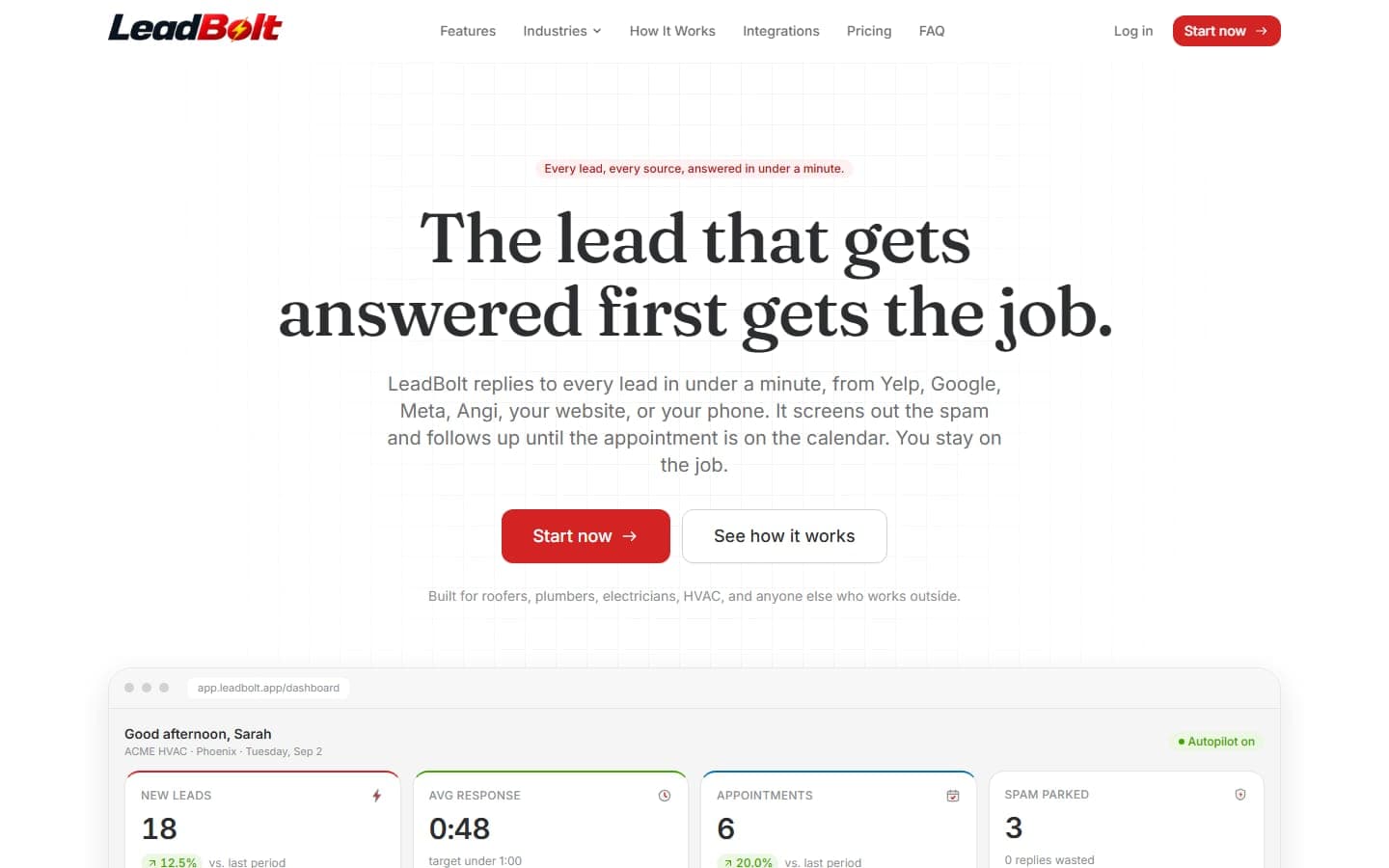
If you need software built around how your team actually works, start with our software development service, see how LeadBolt answers leads in under a minute, or look at Athena CMS, our content system. Curious how your own site would score? Try the website grader.