The challenge
A home services company sells to people having a bad day. The air conditioner quit at two in the morning in a Phoenix July. The water heater has become a water feature. These customers do not browse. They call the first company that looks like it will answer, and they hang up on the second voicemail.
Bleuwave runs HVAC, plumbing, electrical, and handyman crews across metro Phoenix, with commercial HVAC, building controls, construction, and a medical-gas division that also serves San Antonio. That is a lot of trades to explain on one website, and the usual fix (one long services page with a stock photo of a smiling technician) explains none of them well. Each trade has its own searches, its own urgency, and its own buyer. A facility manager pricing a rooftop unit and a homeowner with a tripped breaker should not land on the same page.
What we built
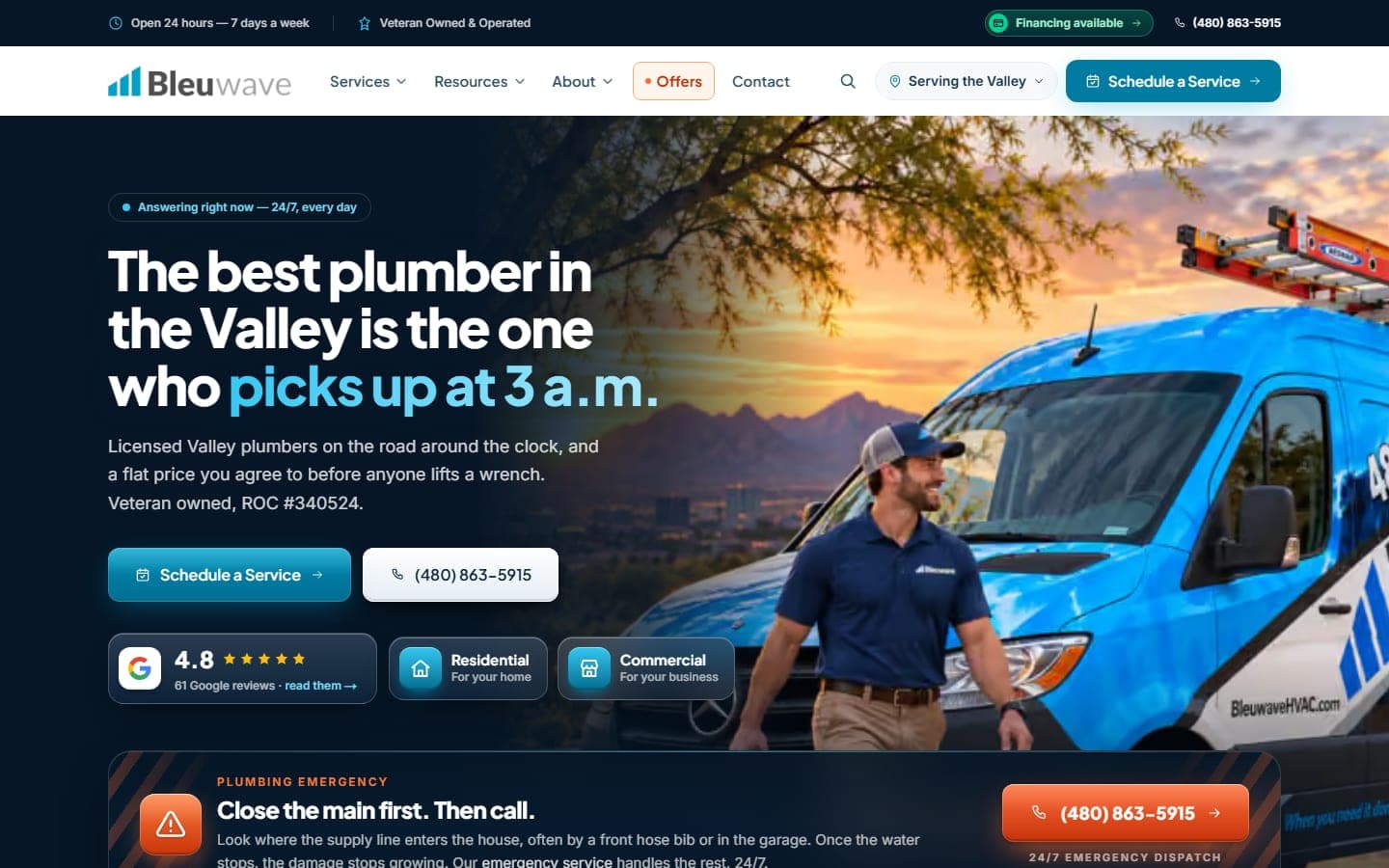
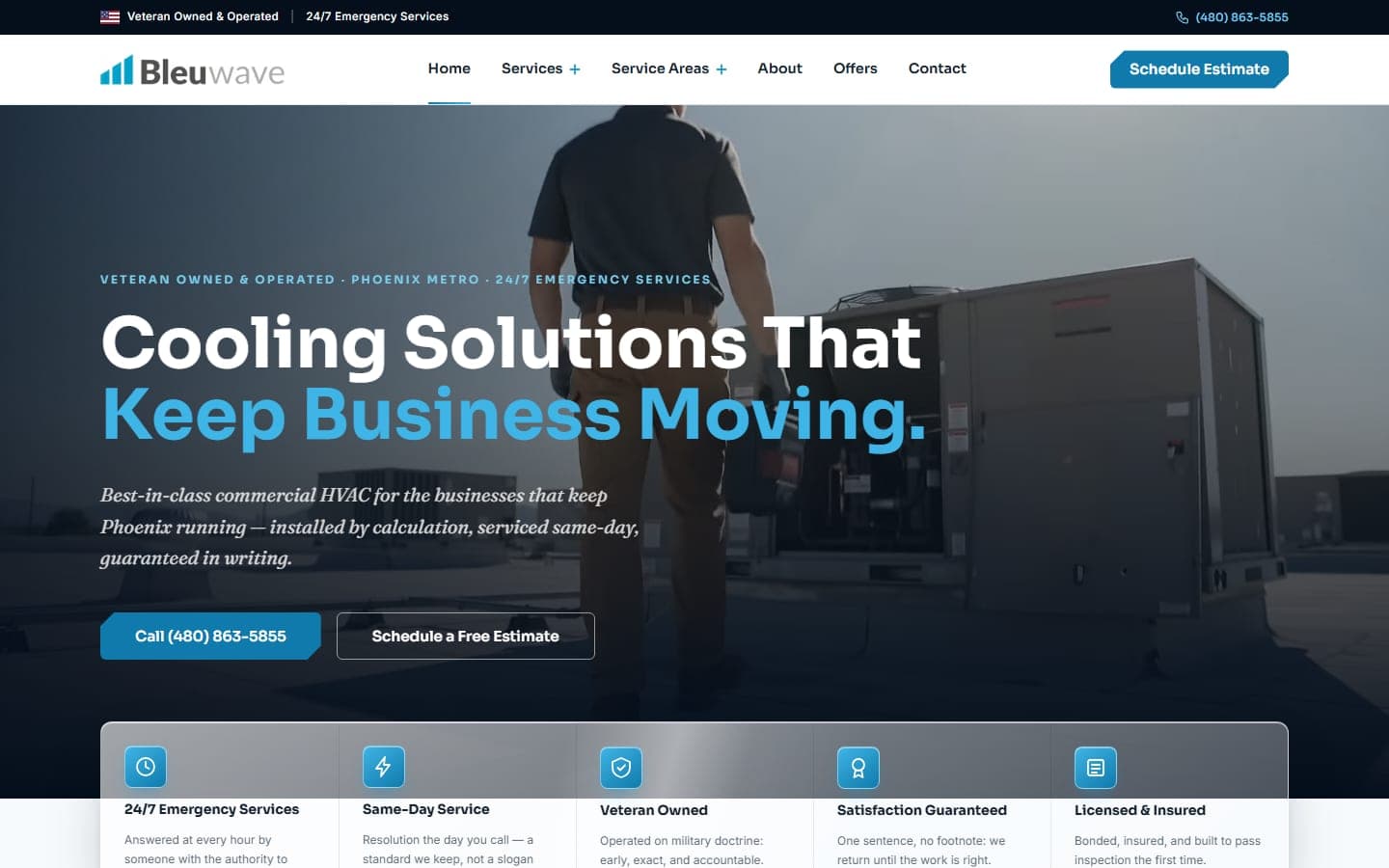
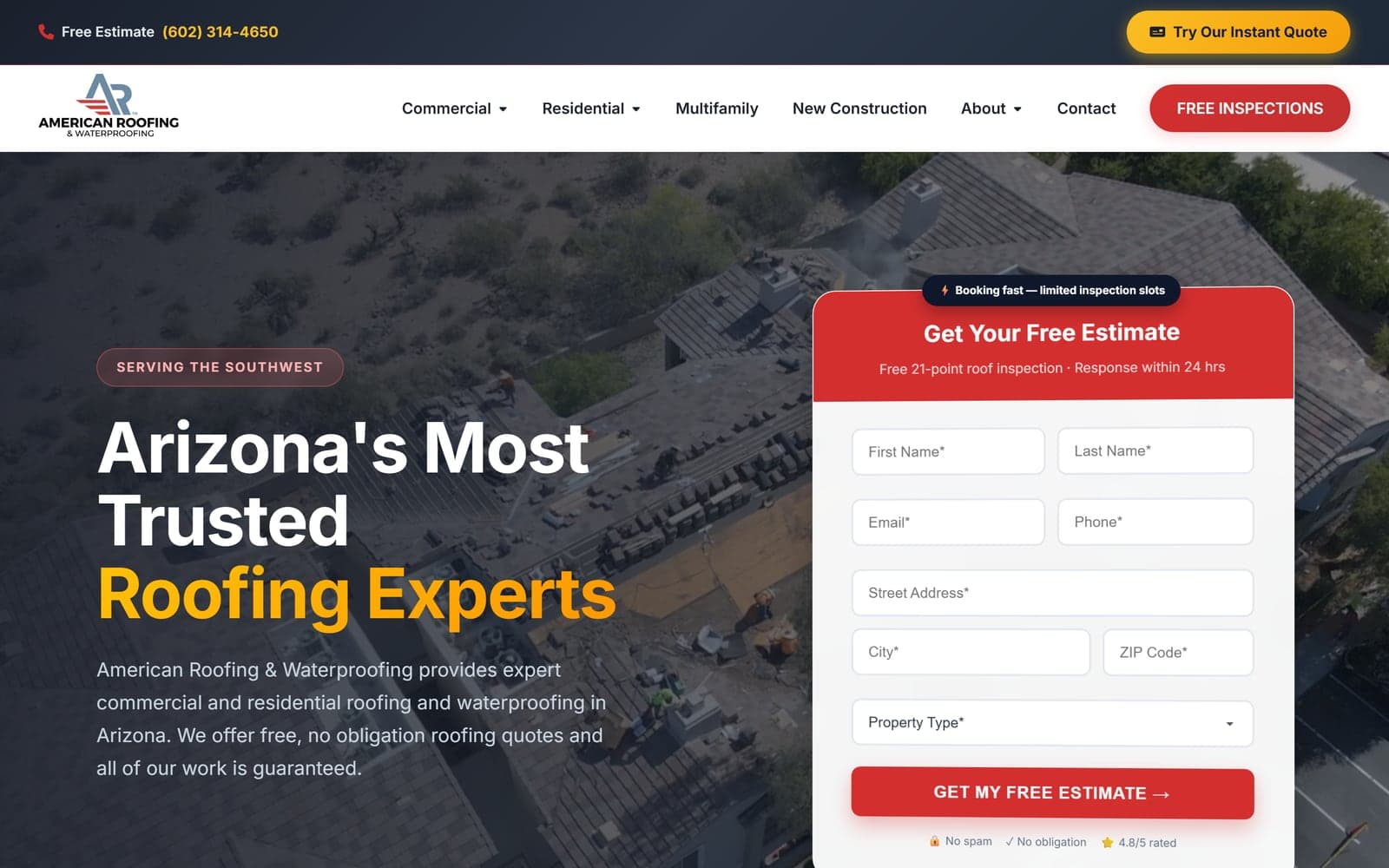
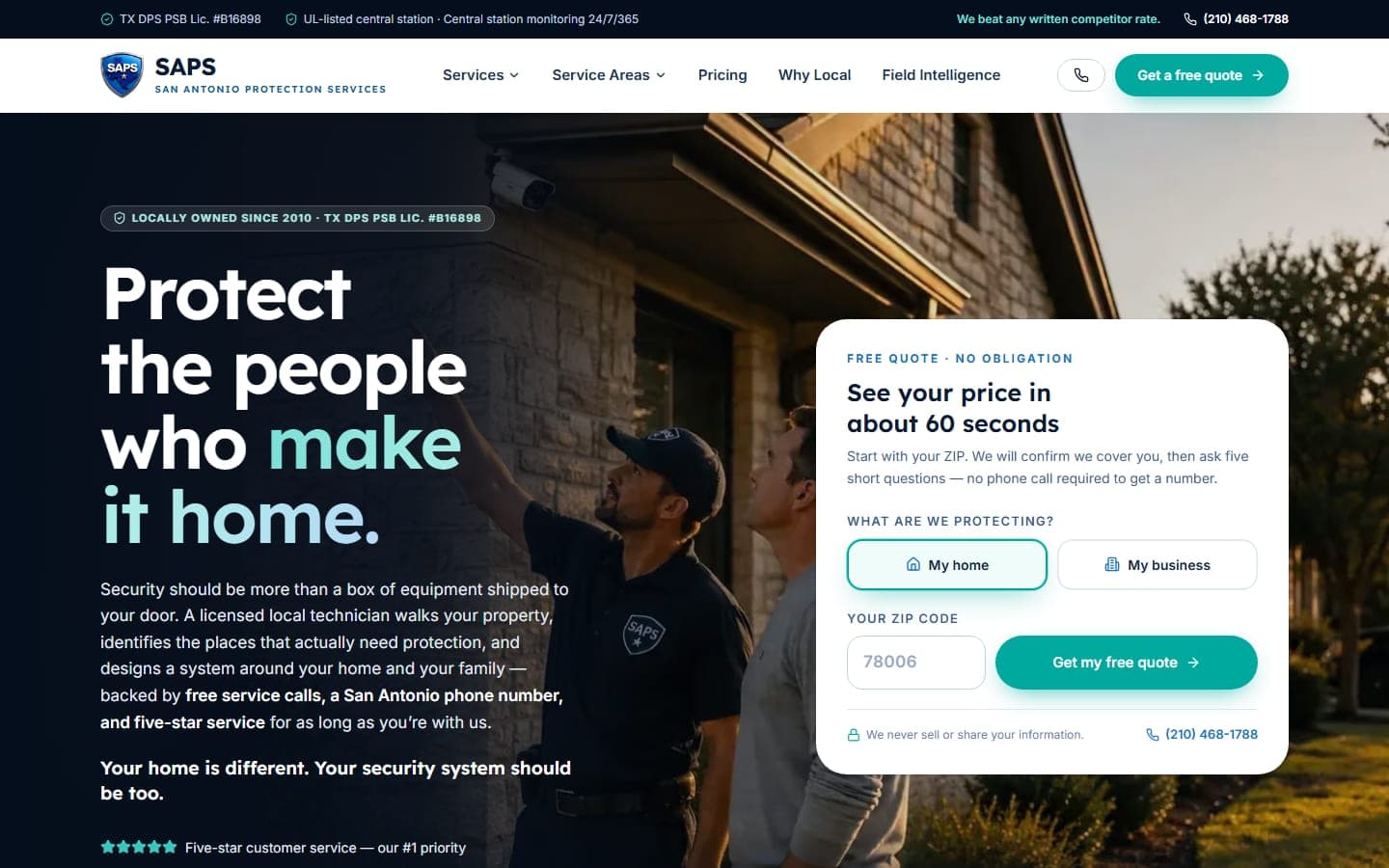
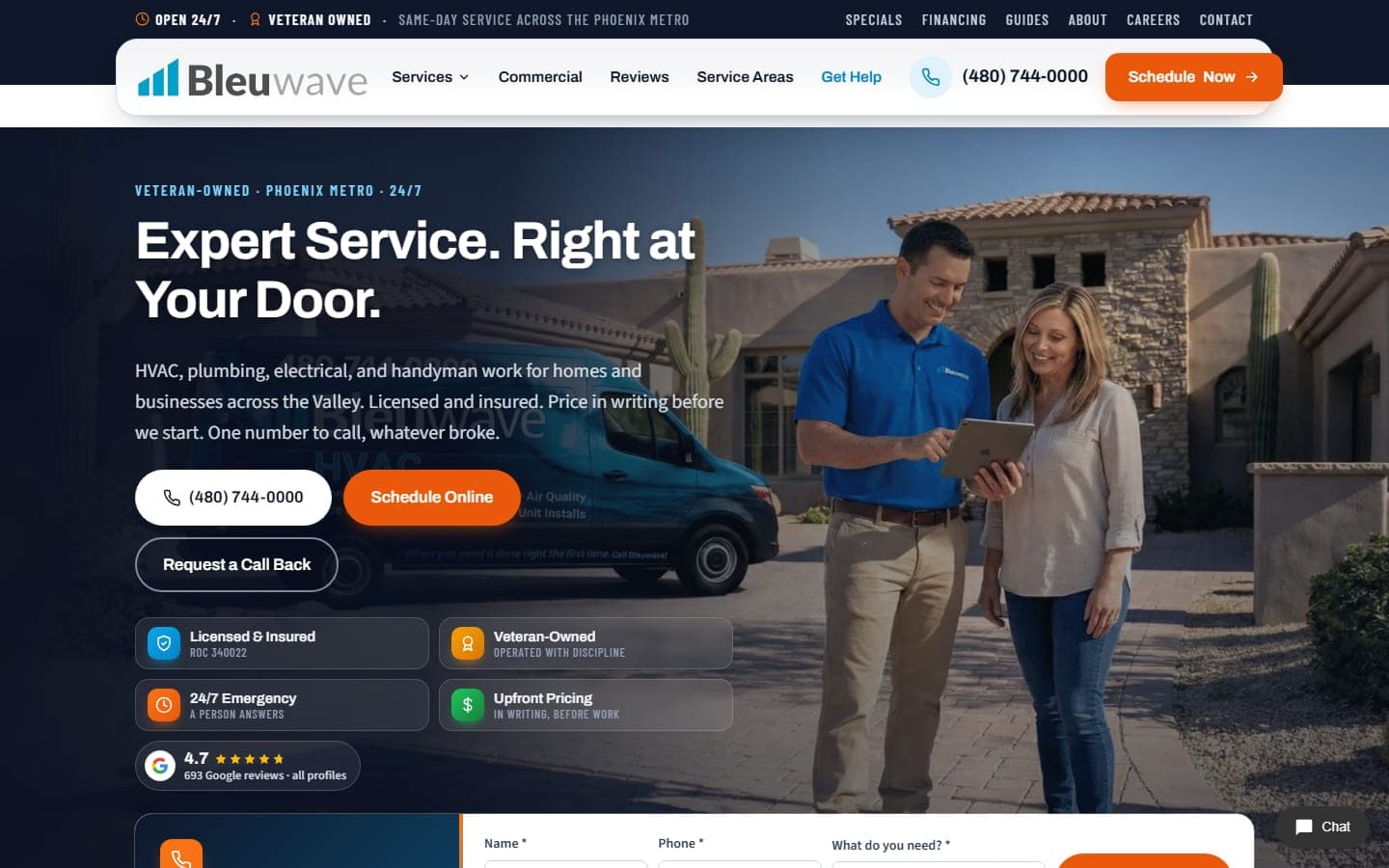
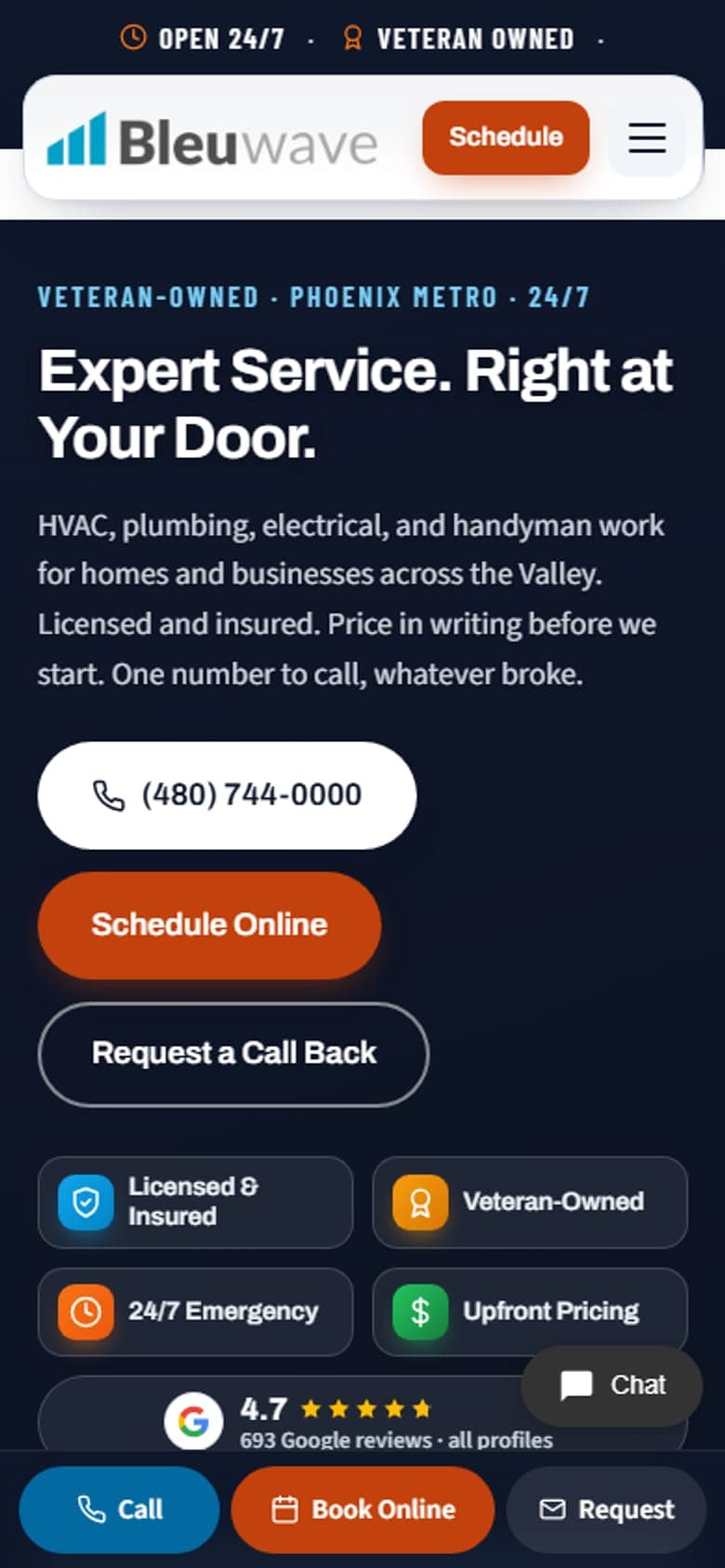
We rebuilt bleuwave.com around the emergency call. The phone number, the promise, and the proof sit on the first screen. Every service has its own page, so a search for a specific repair lands on the page written for it. That is ordinary local SEO structure, and it is also ordinary courtesy.
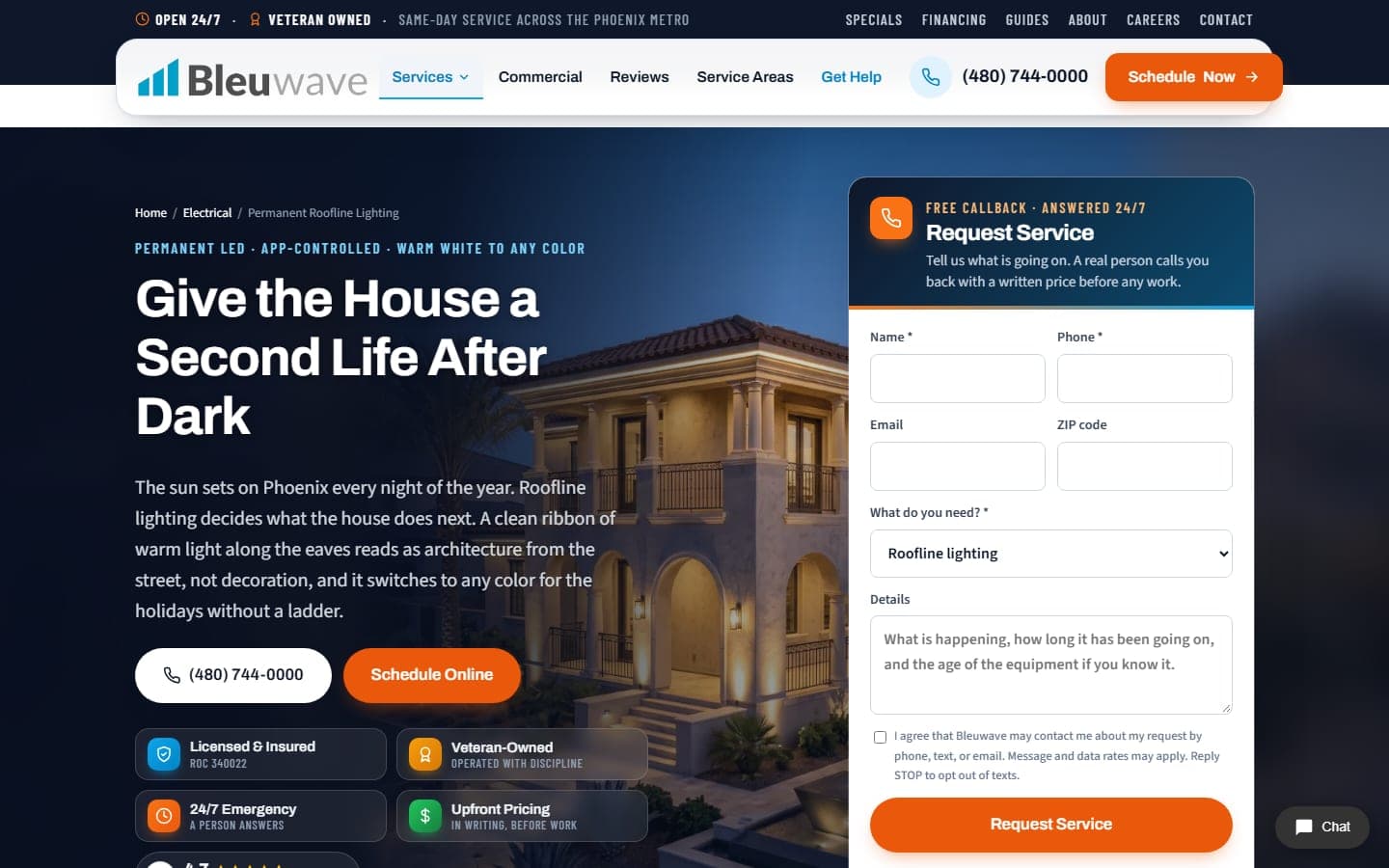
For the visitor who cannot talk right now, a request-a-callback form is answered 24/7 by a real person. For the one who wants to book, an on-page assistant schedules straight into ServiceTitan, the dispatch software the crews already run on. Instant estimates, savings tools, financing, and a permanent roofline lighting line all live on the same site, which stays fast because it was built to be fast rather than assembled from plugins.
Around the main site we built a family of trade sites and campaign pages, each with one job:
- Plumbing at plumberphx.com, with an estimate panel that diagnoses the problem and an emergency flag for active leaks. The full story is in the Bleuwave Plumbing case study.
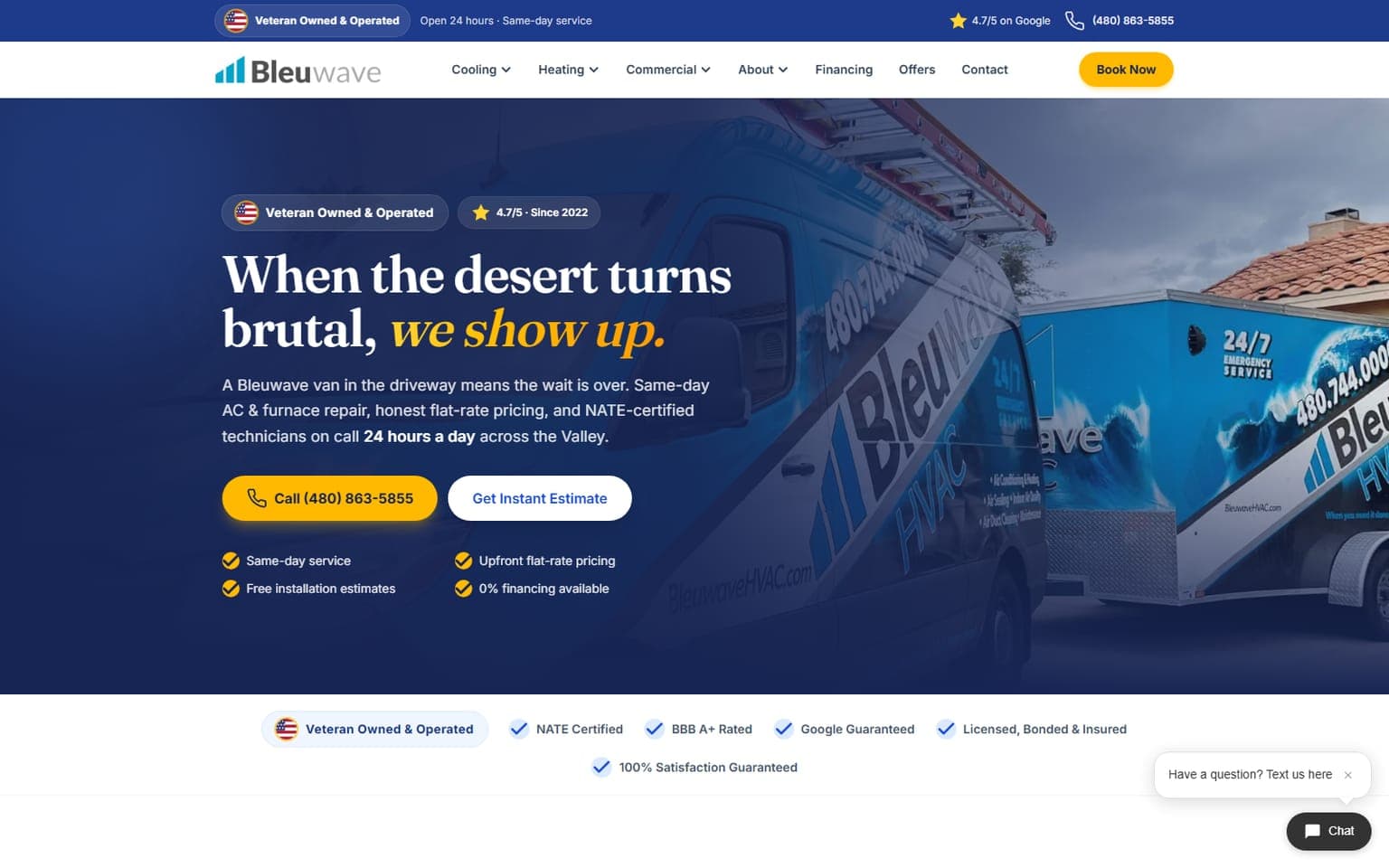
- AC repair at bleuwaveacrepair.com, built around an Instant Estimate that returns a flat-rate number in seconds. See the Bleuwave HVAC case study.
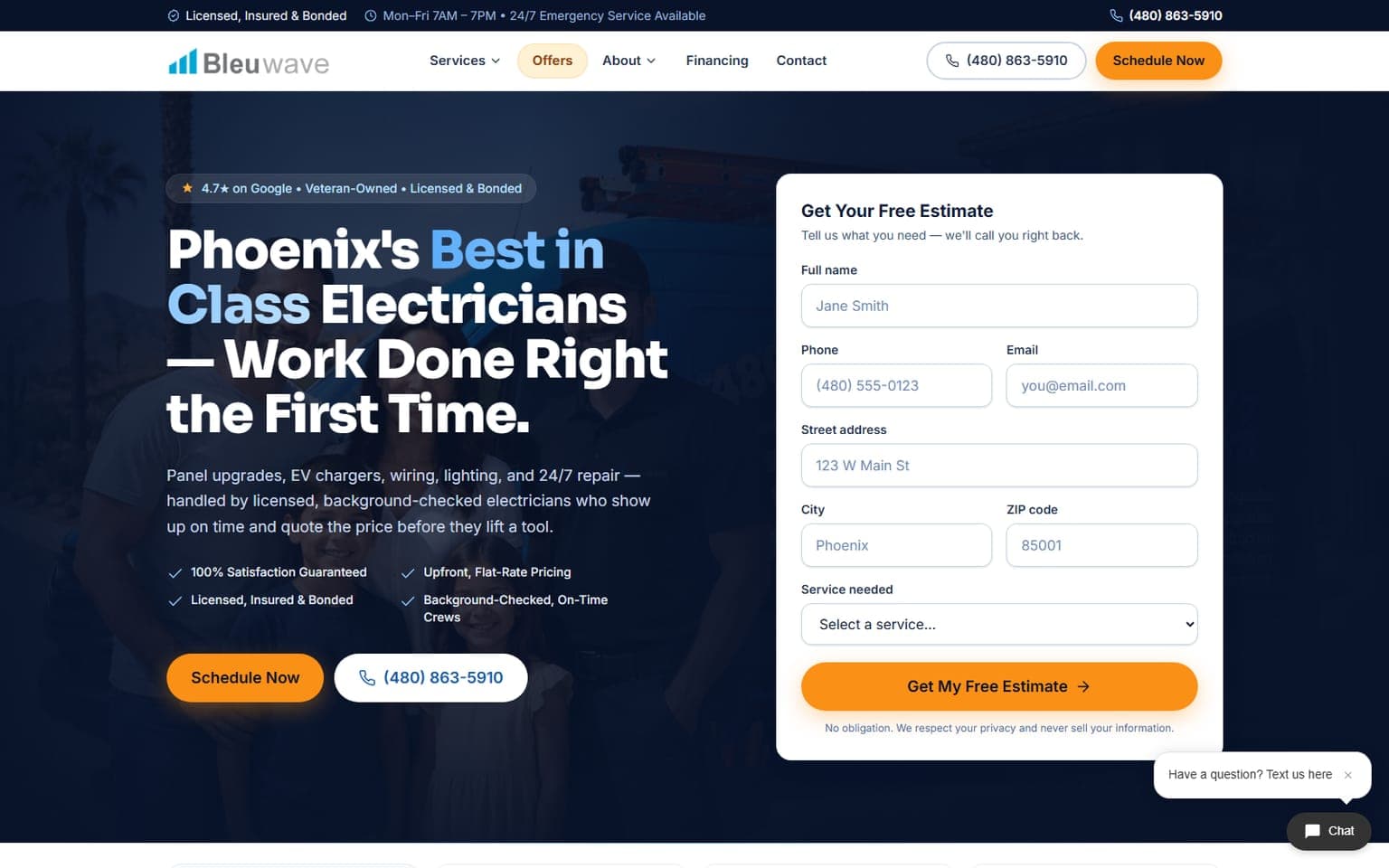
- Electrical at phxazelectrician.com, moved off WordPress, with a savings calculator for panel upgrades and EV chargers.
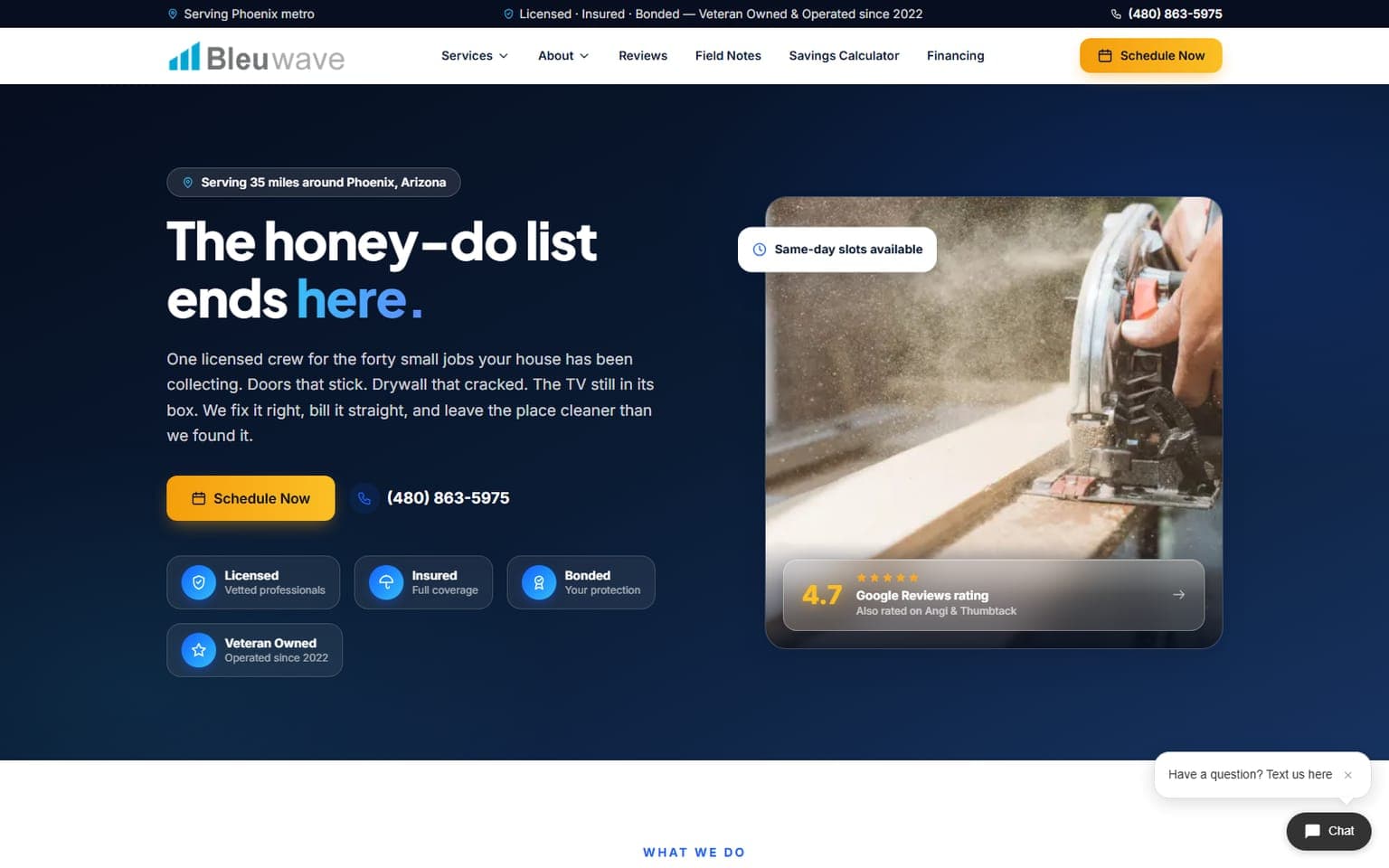
- Handyman at phoenixhandyman.net, with a calculator that compares one bundled visit against hiring four separate trades.
- Commercial HVAC at bleuwavecommercialhvac.com, written for rooftop units, chillers, kitchen ventilation, and new construction.
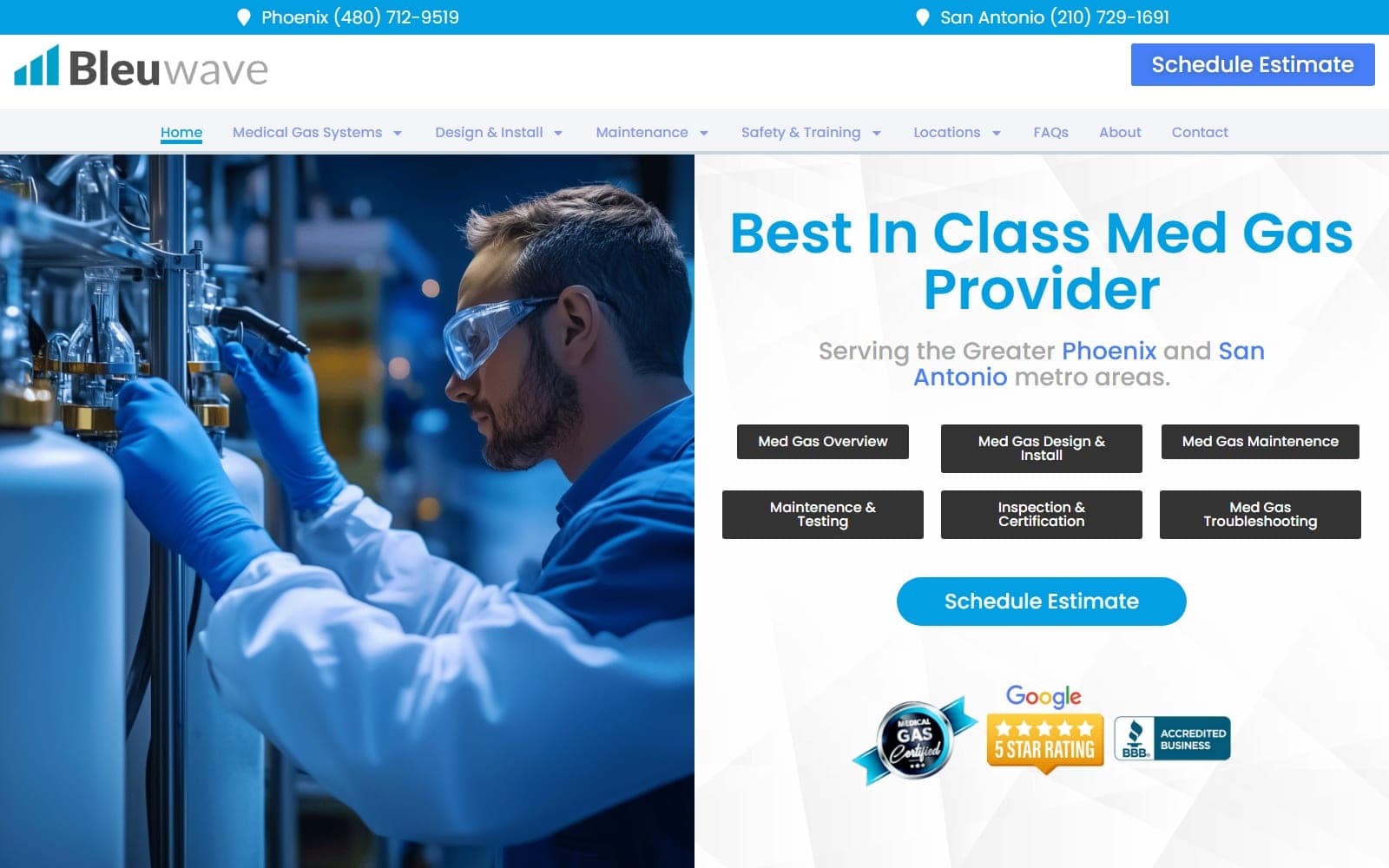
- Med gas at bleuwavemedgas.com, covering Phoenix and San Antonio for design-install, maintenance, and safety training.
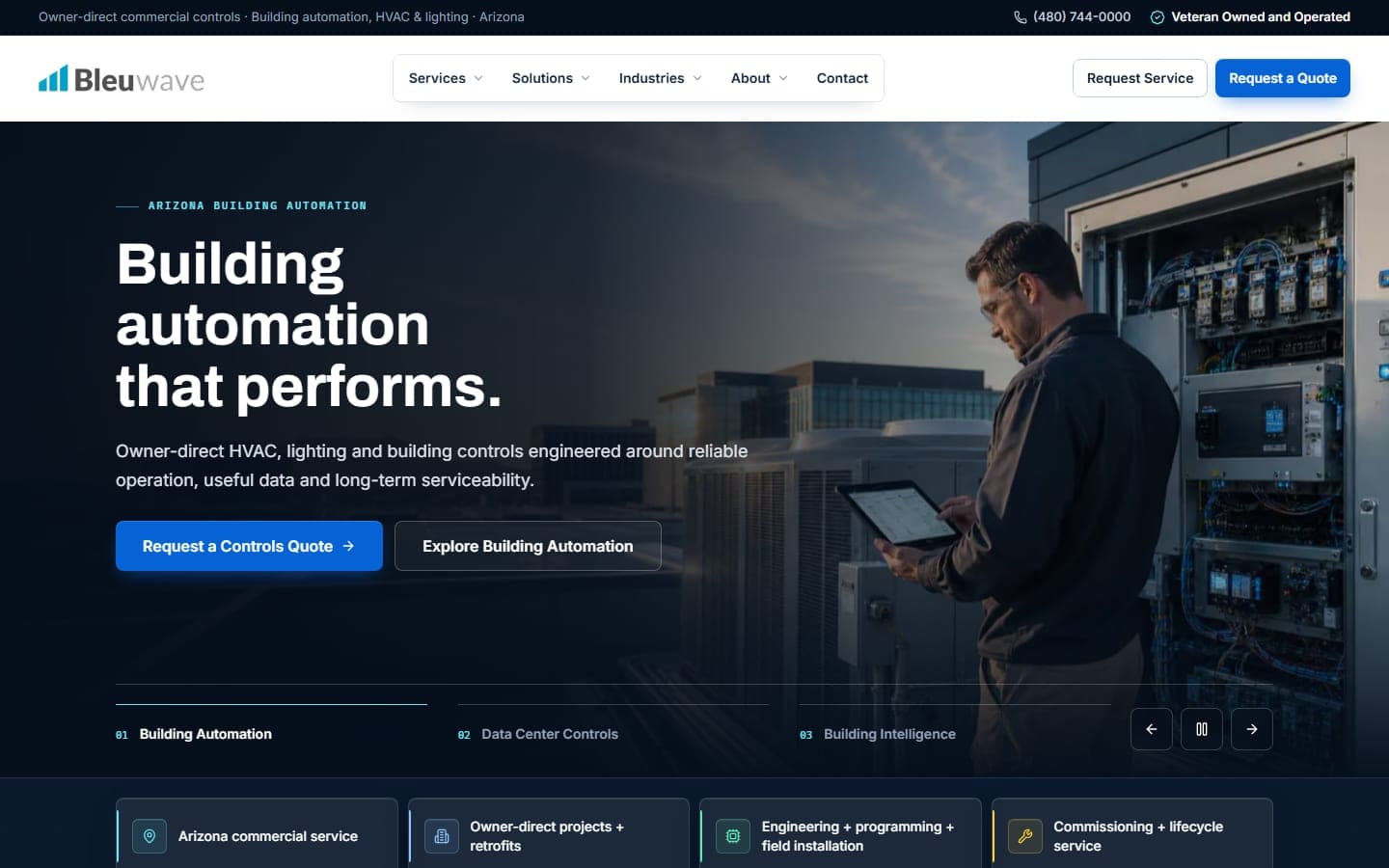
- Building controls at phoenixcontrolsystems.com, for owners buying HVAC, lighting, and building automation.
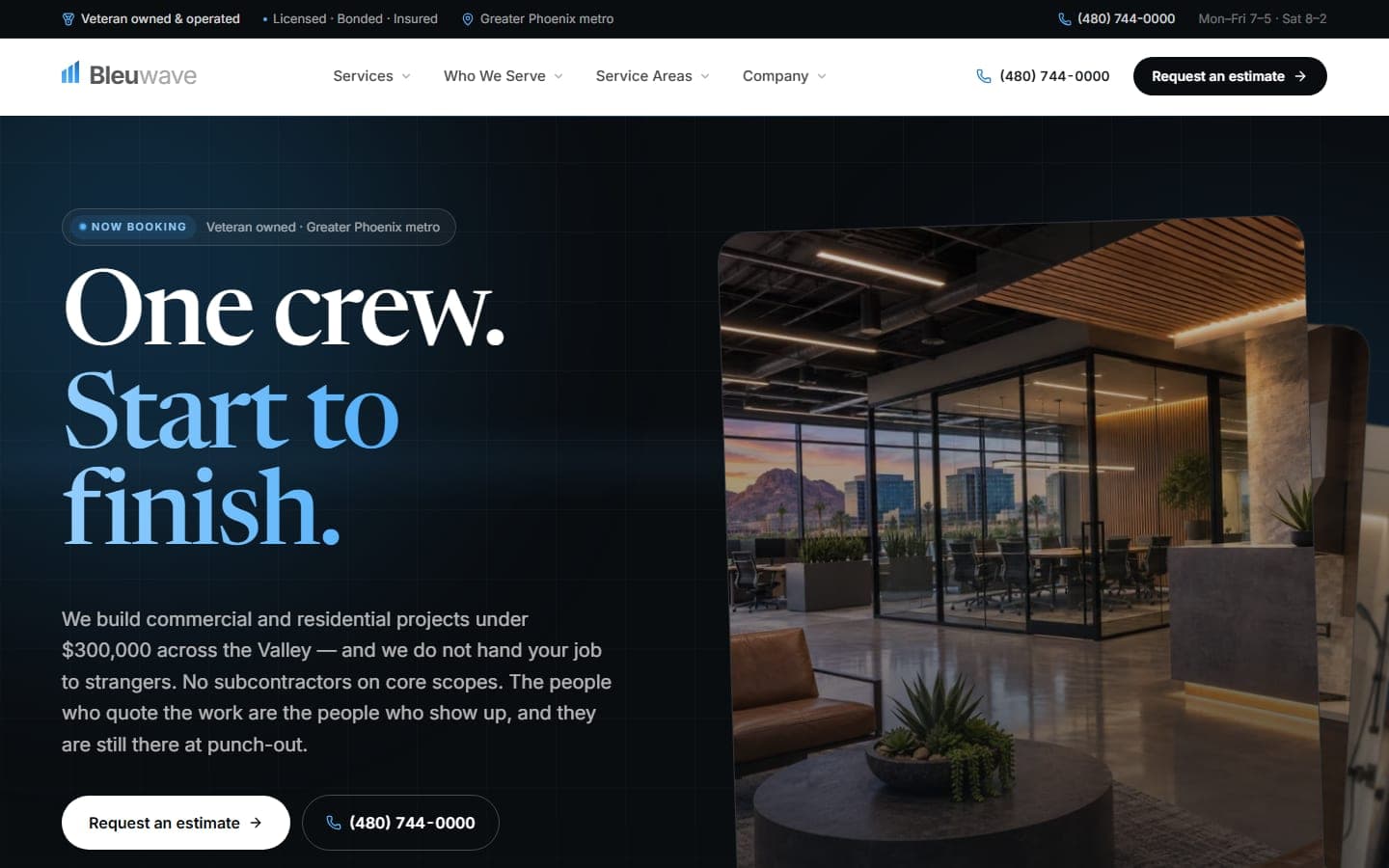
- Construction at bleuwaveconstruction.com, for commercial and residential jobs under $100,000.
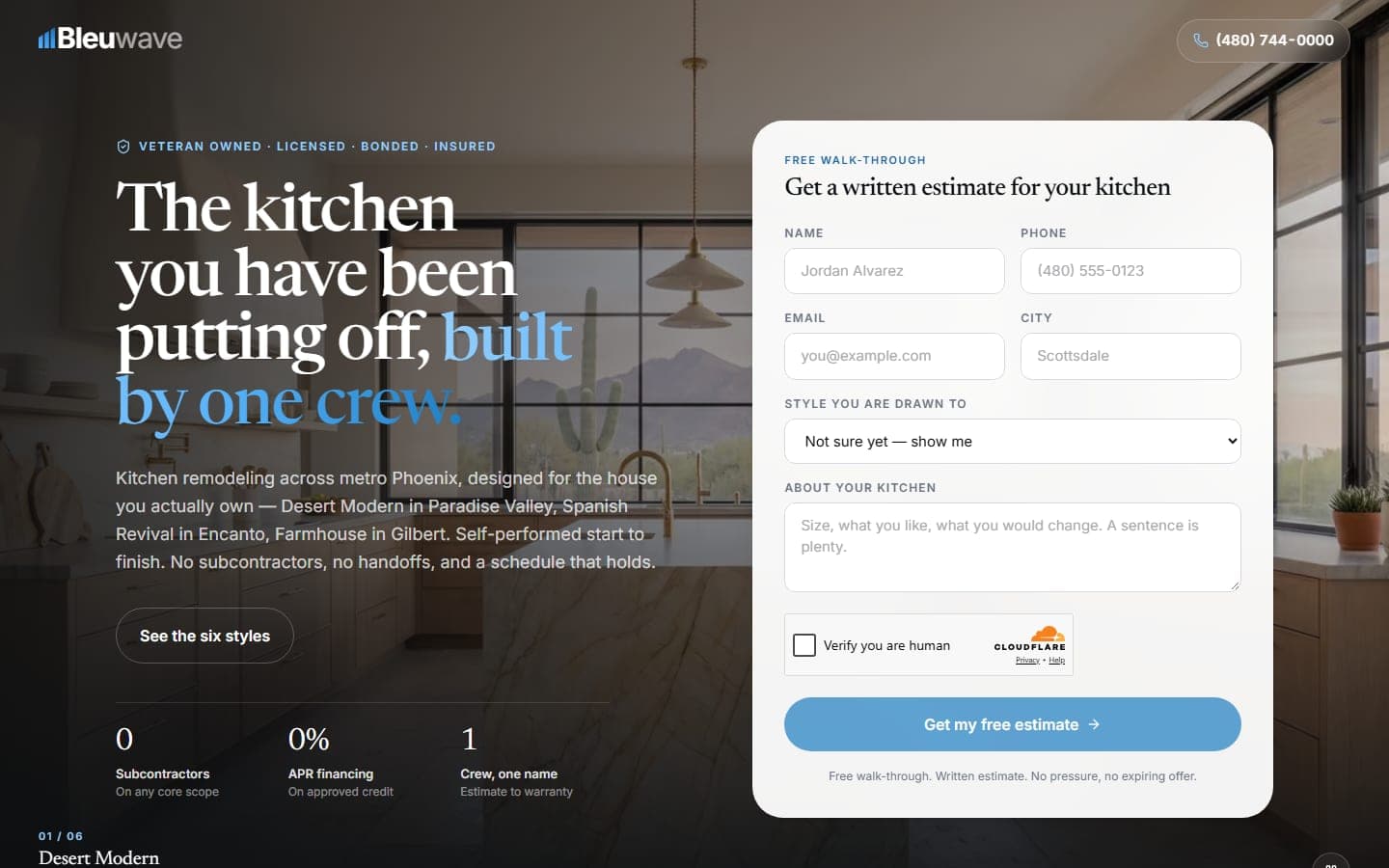
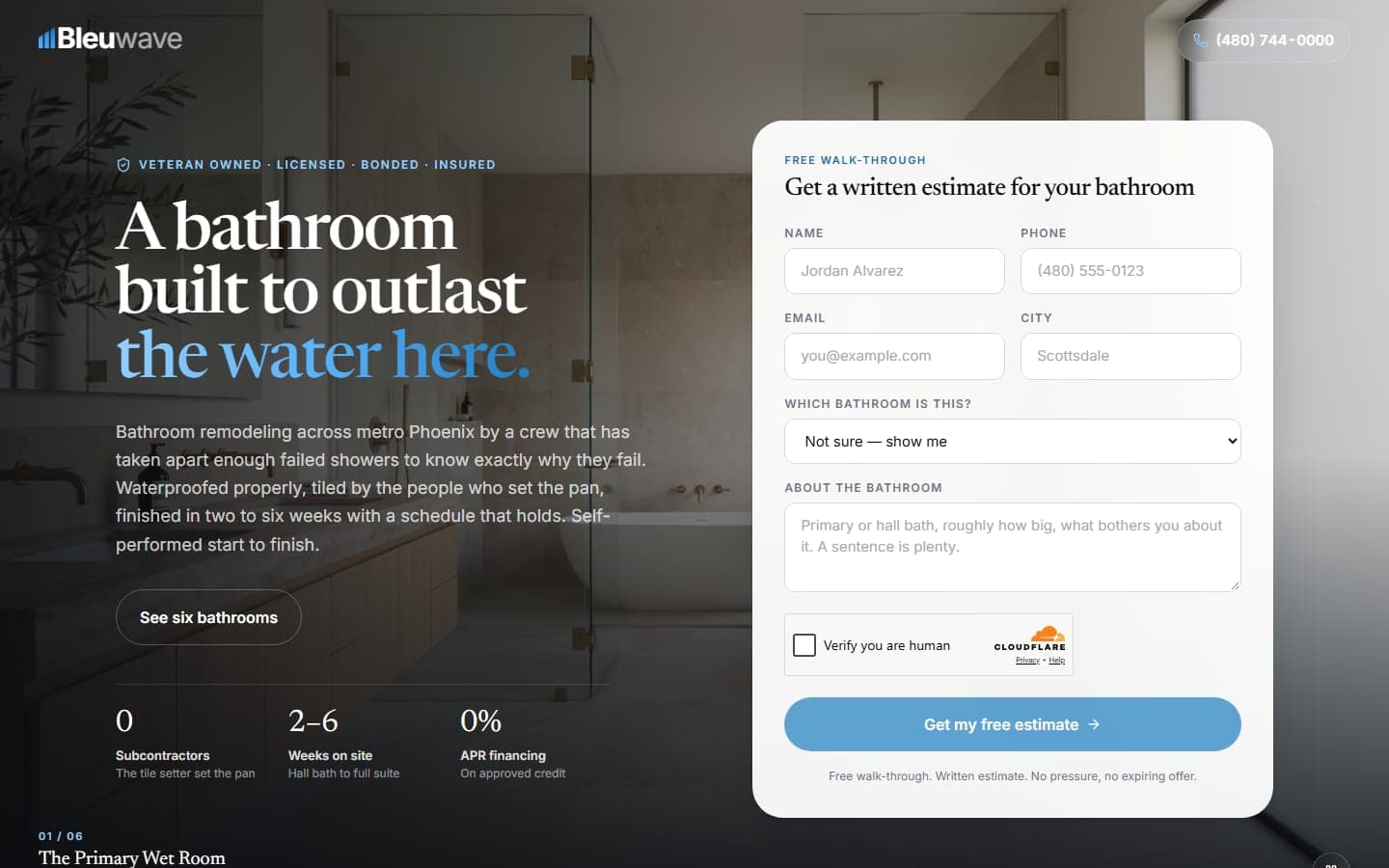
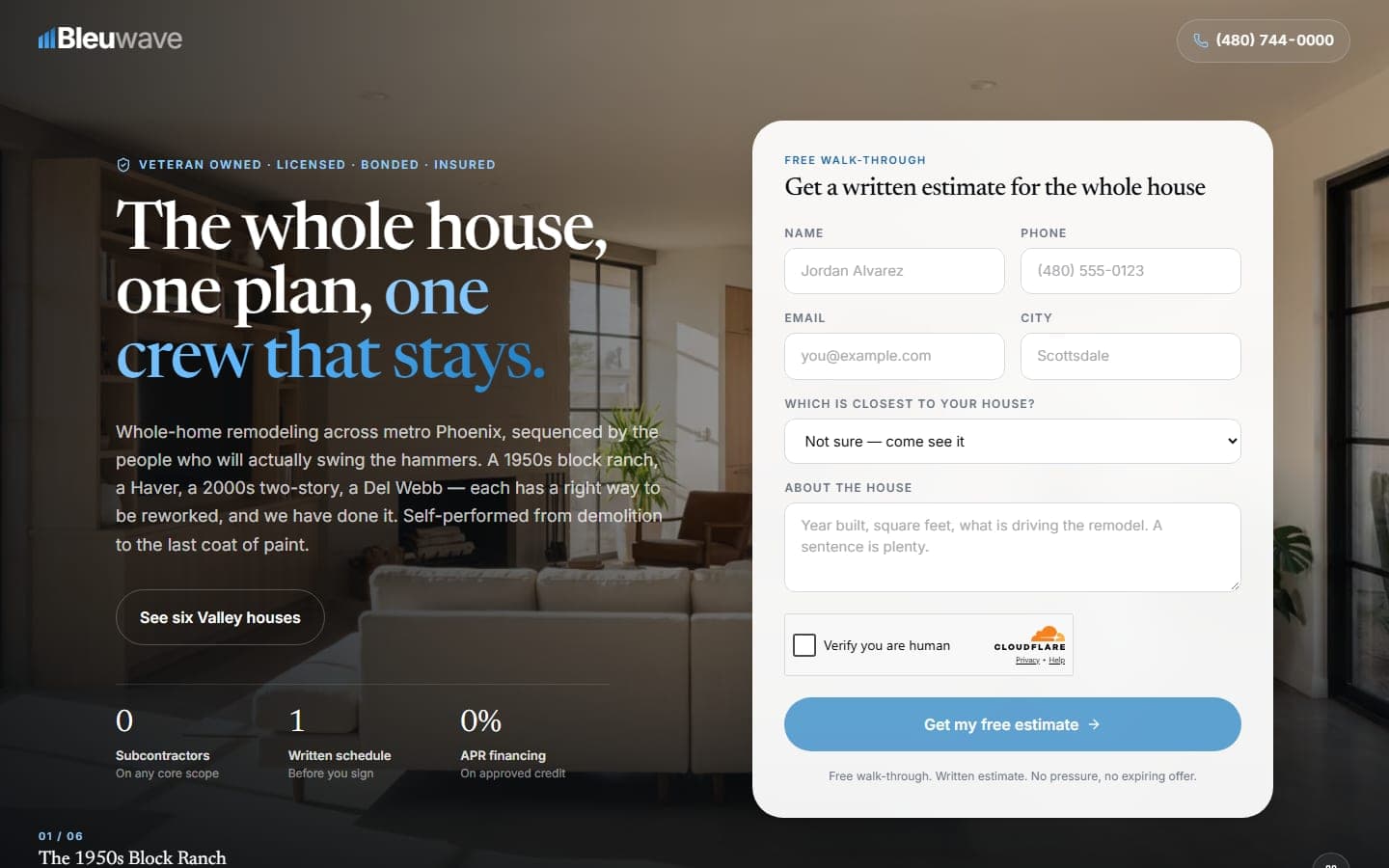
- Remodeling ad pages for kitchens, bathrooms, and whole homes, built for Google Ads traffic.
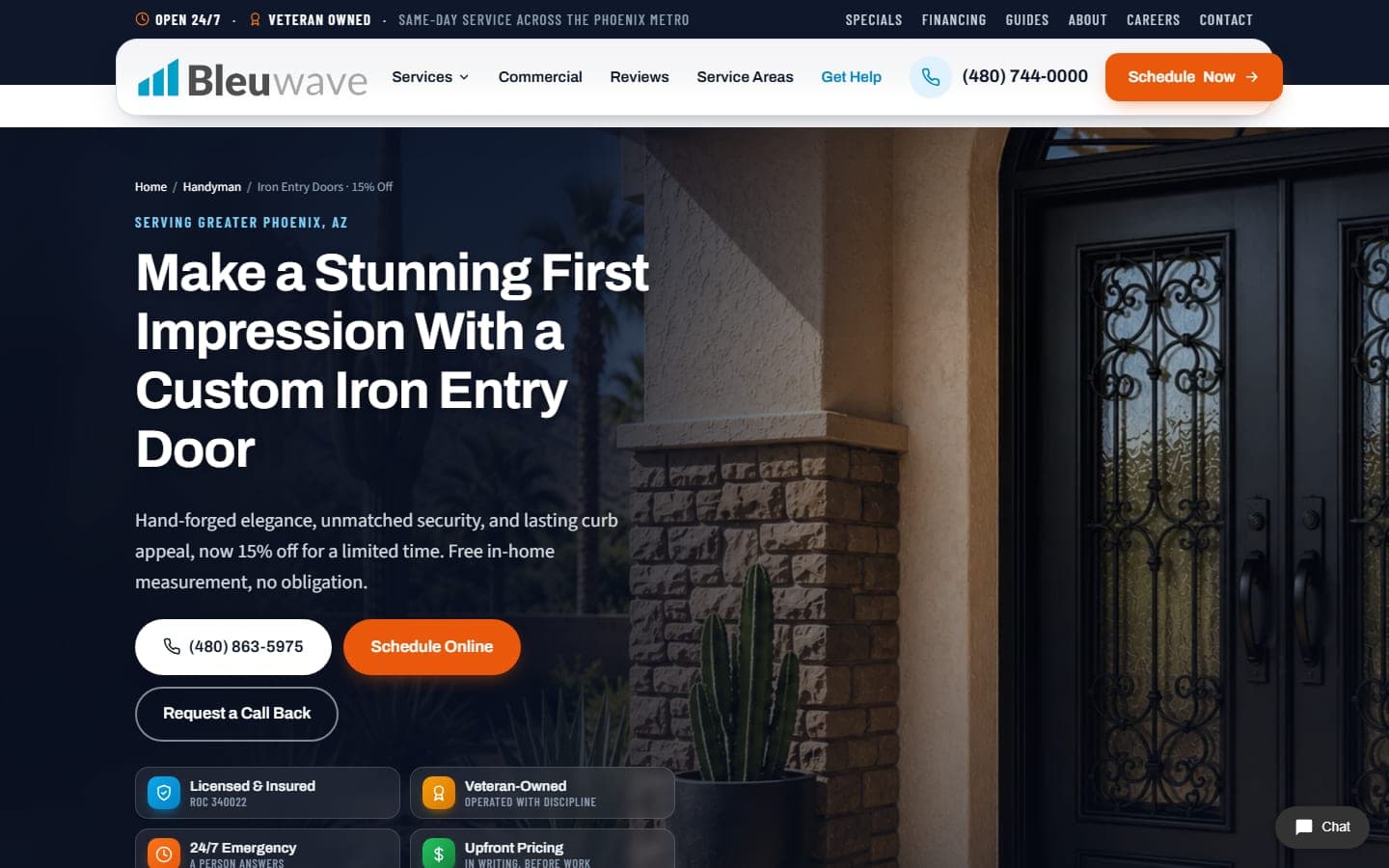
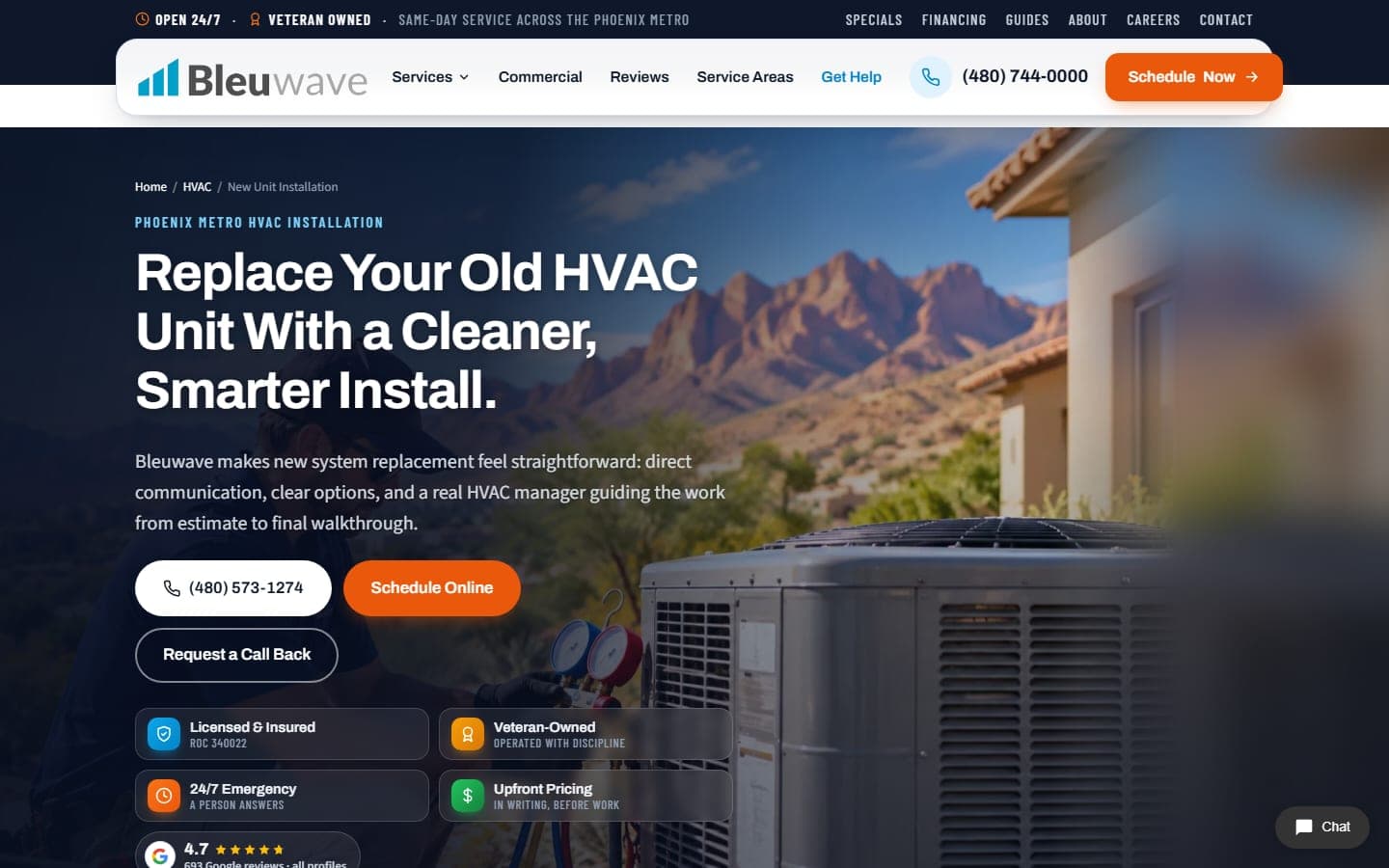
- Offer pages for permanent roofline lighting, custom iron entry doors, and new HVAC installs.
Why it works
Three reasons, none of them mysterious.
First, the first screen answers the only questions an emergency caller has: can I reach someone, will they come, and can I trust them. Everything else sits below, where people with time can read it.
Second, separate pages and separate sites match separate searches. Google ranks pages, not companies. A page about commercial chillers can rank for commercial chillers; a paragraph about them on a general services page mostly cannot. The same logic runs our own pages for HVAC, plumbing, and electrical contractors.
Third, the remodeling ad pages strip out everything that does not help a paid click become a booked visit: no navigation to wander into, a bot check on the form, and every click tracked back to the keyword that paid for it. That is landing page optimization in its least glamorous and most useful form. The kitchen page is among the highest-converting pages the team has built.
What's on the site
- One phone number and a schedule button on every page
- A callback form answered 24/7 by a person
- Booking that lands in ServiceTitan, not an inbox
- Instant estimates, savings calculators, and financing paths
- A page per service, per trade, and per offer
- Ad landing pages with one call to action each
If your company runs more than one trade, this is the pattern: one fast hub, a page per service, and a dedicated site or landing page wherever a trade has its own buyer. Run your current site through the website grader, price a rebuild with the website cost calculator, or read how San Antonio contractors keep the dispatch board full. We build for home services companies in San Antonio and well beyond it.