The challenge
Plumbing has an awkward sales problem: the customer rarely knows what they are buying. They know the floor is wet, the drain is slow, or the water heater is making a noise that sounds expensive. Then the website asks them to choose between "drain cleaning," "repiping," and "fixture repair," and they guess, or they leave.
The second problem is urgency. A slow drain and a burst supply line are both "plumbing," but one can wait until Tuesday and the other is ruining a subfloor as we speak. A form that treats them the same puts the emergency in line behind the inconvenience. For a veteran-owned Valley plumber whose business is often decided at three in the morning, that is the part that matters.
What we built
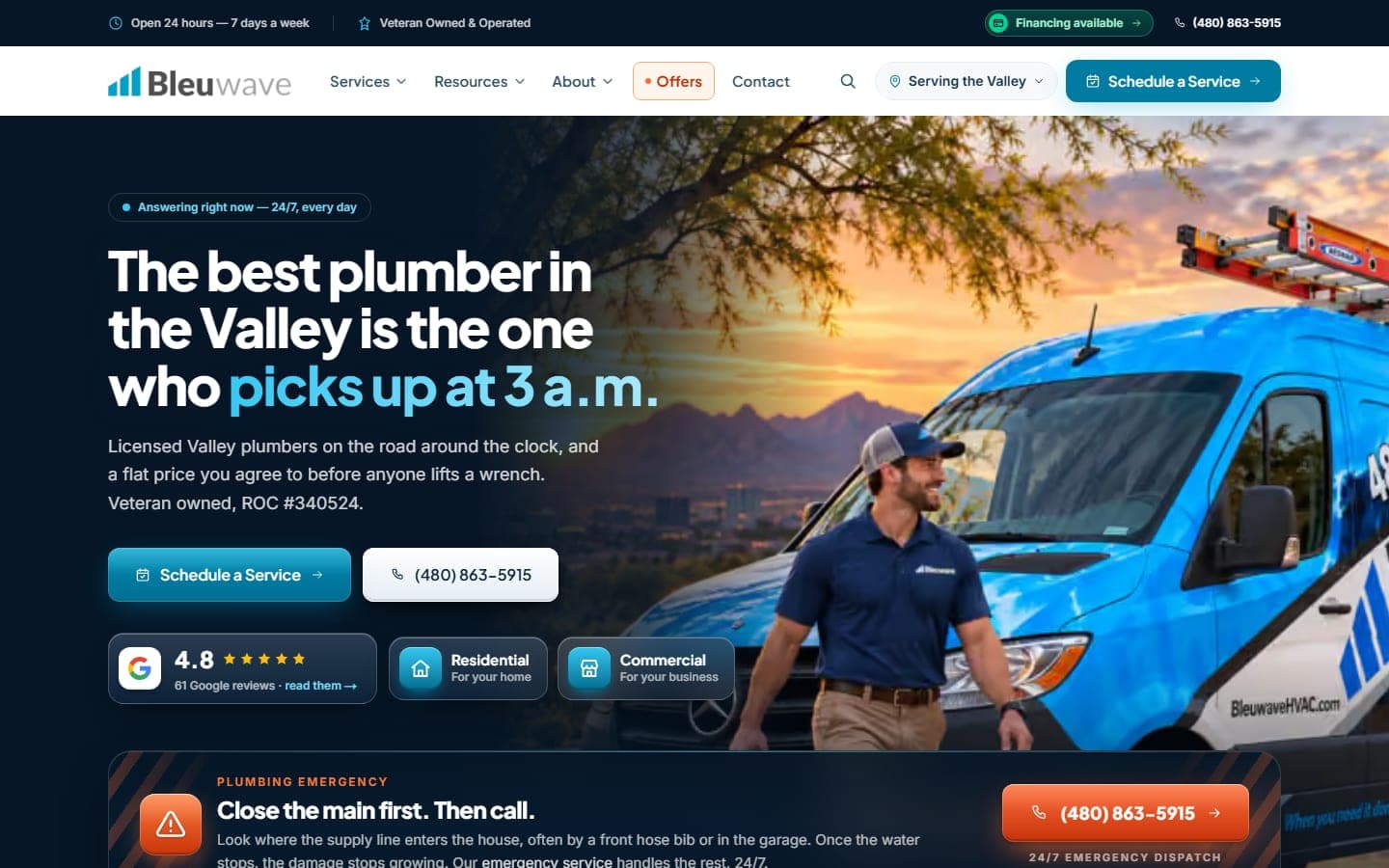
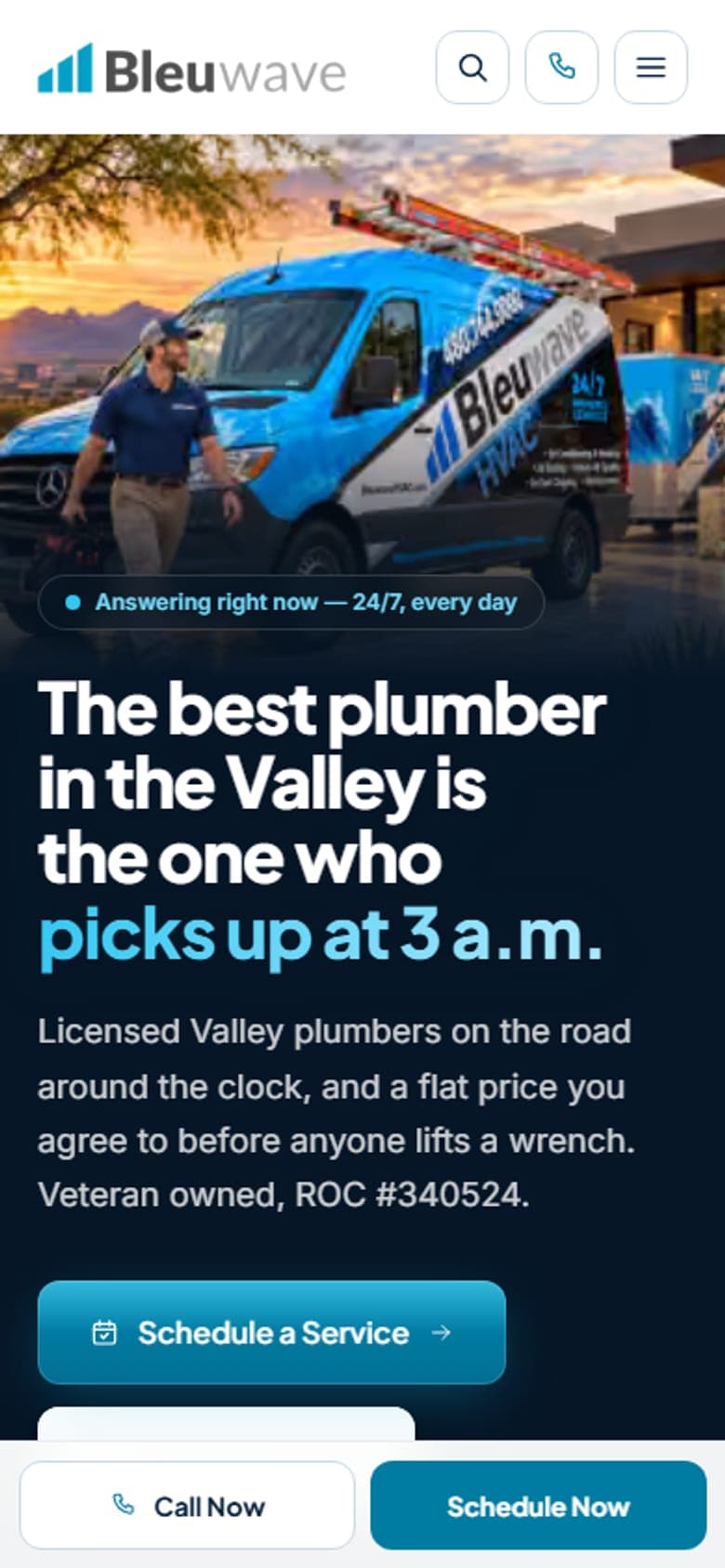
We rebuilt plumberphx.com from the ground up as a fast custom build over a secure database.
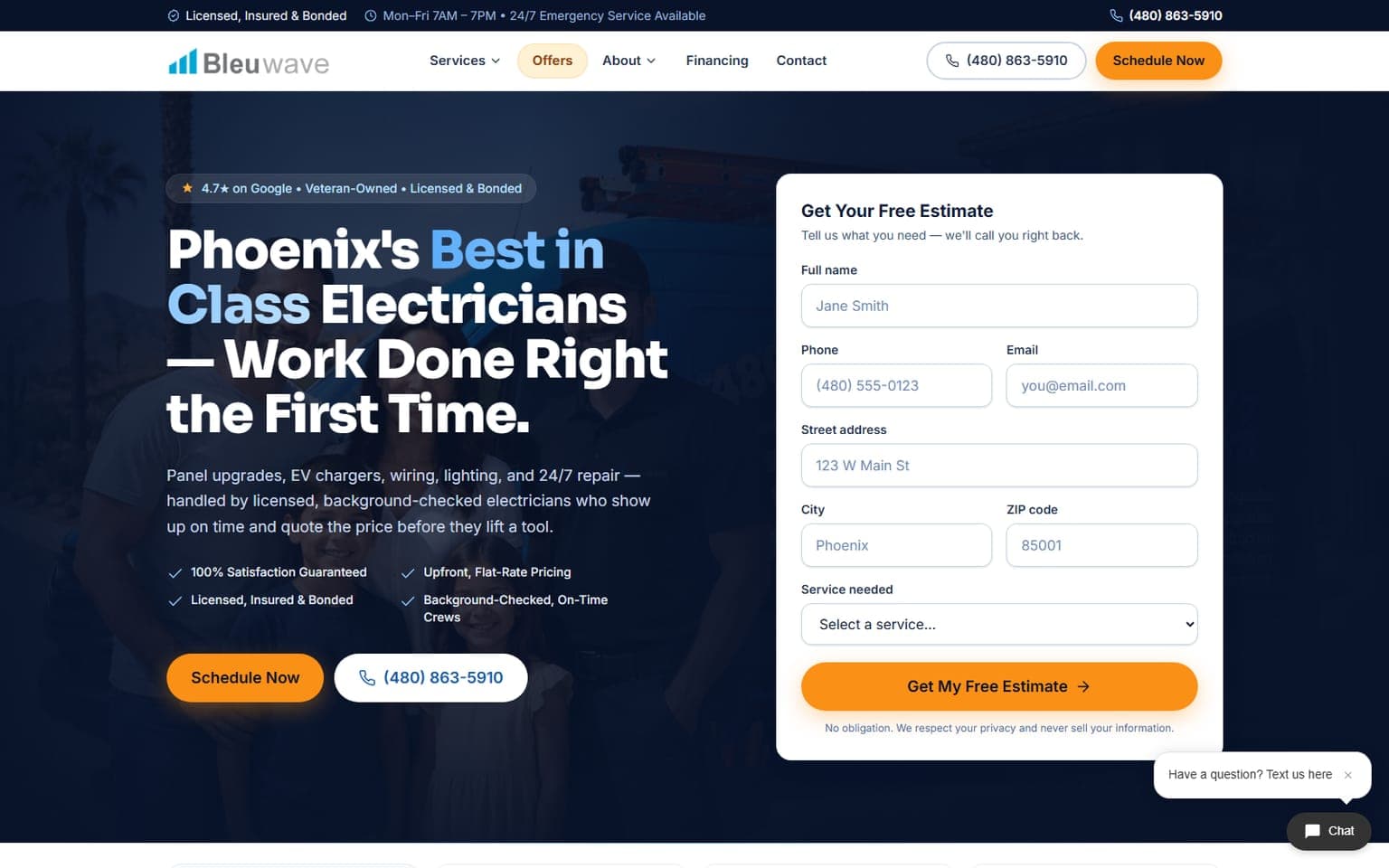
The estimate panel doubles as a triage engine. A homeowner who cannot name the problem picks "help me figure it out," and the form diagnoses it with them instead of making them guess. An emergency flag escalates an active leak ahead of the queue, so the person with water on the floor gets a truck rather than a voicemail.
Service-area routing, license and bonding proof, and a live cost path are wired into the same typed data layer. "Typed" sounds like a programmer's hobby, and it partly is, but the payoff is practical: every service, area, and price is defined once, so the estimate form, the service pages, and the routing rules cannot quietly disagree with each other. That is the kind of plumbing a plumber's website needs, and we cover it under database development.
Around the site sits the marketing that brings people to it: SEO, Google Maps and local search, paid search, content, and email.
Why it works
It meets the customer where they are, which is confused. A diagnostic question ("what are you seeing?") is easier to answer than a service menu. Each answer narrows the problem, and by the end the visitor has described a job the dispatcher can actually price. Fewer guesses, fewer wrong trucks.
It ranks emergencies like emergencies. The flag for an active leak is the website equivalent of a triage nurse. It costs the homeowner one tap and saves the company from losing its most urgent, and often most valuable, calls to whoever answers first.
It answers the trust question early. License and bonding proof sit where a homeowner looks before letting a stranger into the house. A live cost path means they are not booking blind.
It is one system, not five plugins. Because the data layer is shared, adding a service area or changing a price updates every page that depends on it. Our custom website vs. WordPress guide explains when that trade is worth making and when it is not.
What's on the site
- An estimate panel with a "help me figure it out" diagnostic path
- An emergency flag that escalates active leaks
- Service-area routing
- License and bonding proof up front
- A live cost path
- A shared, typed data layer over a secure database
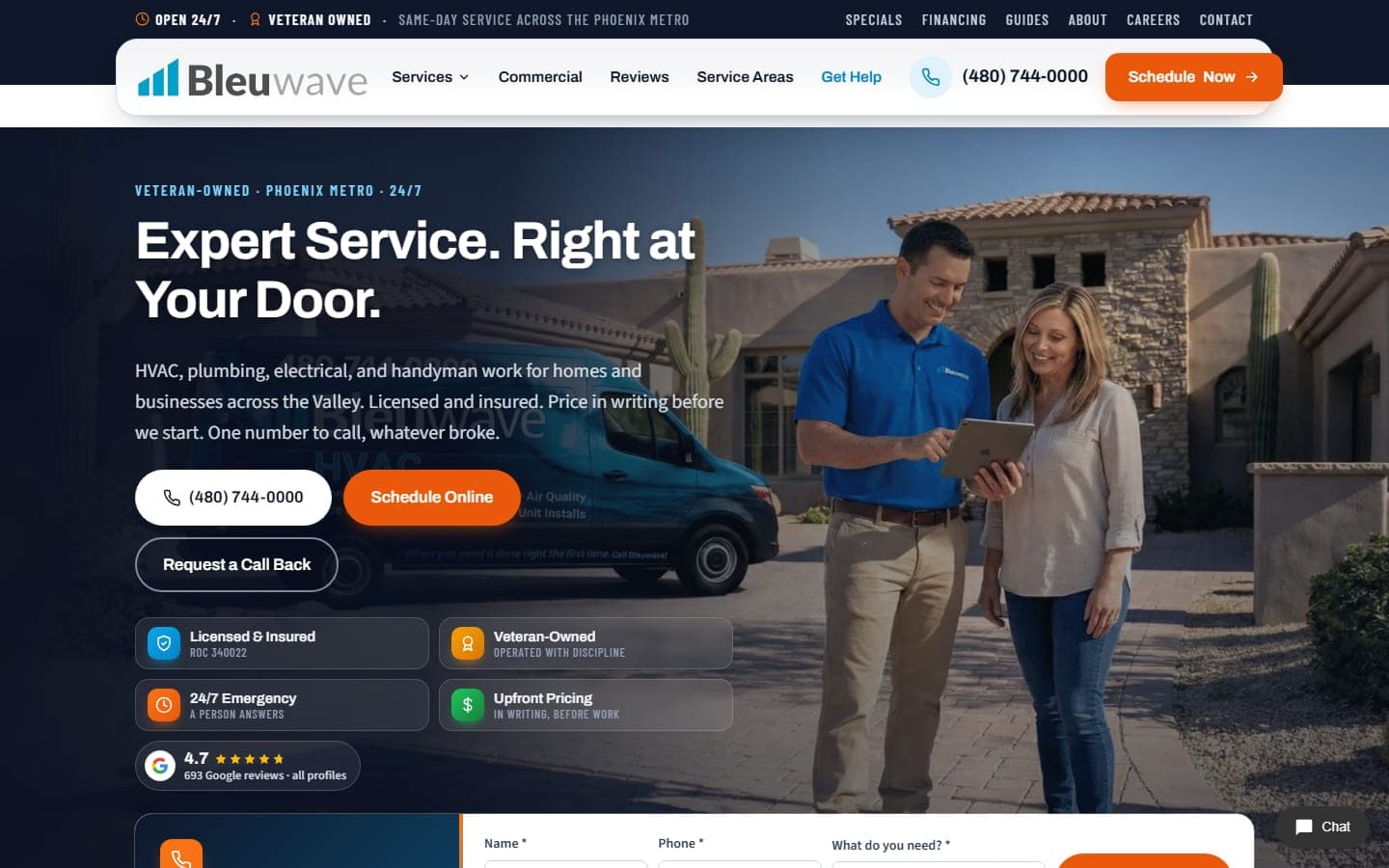
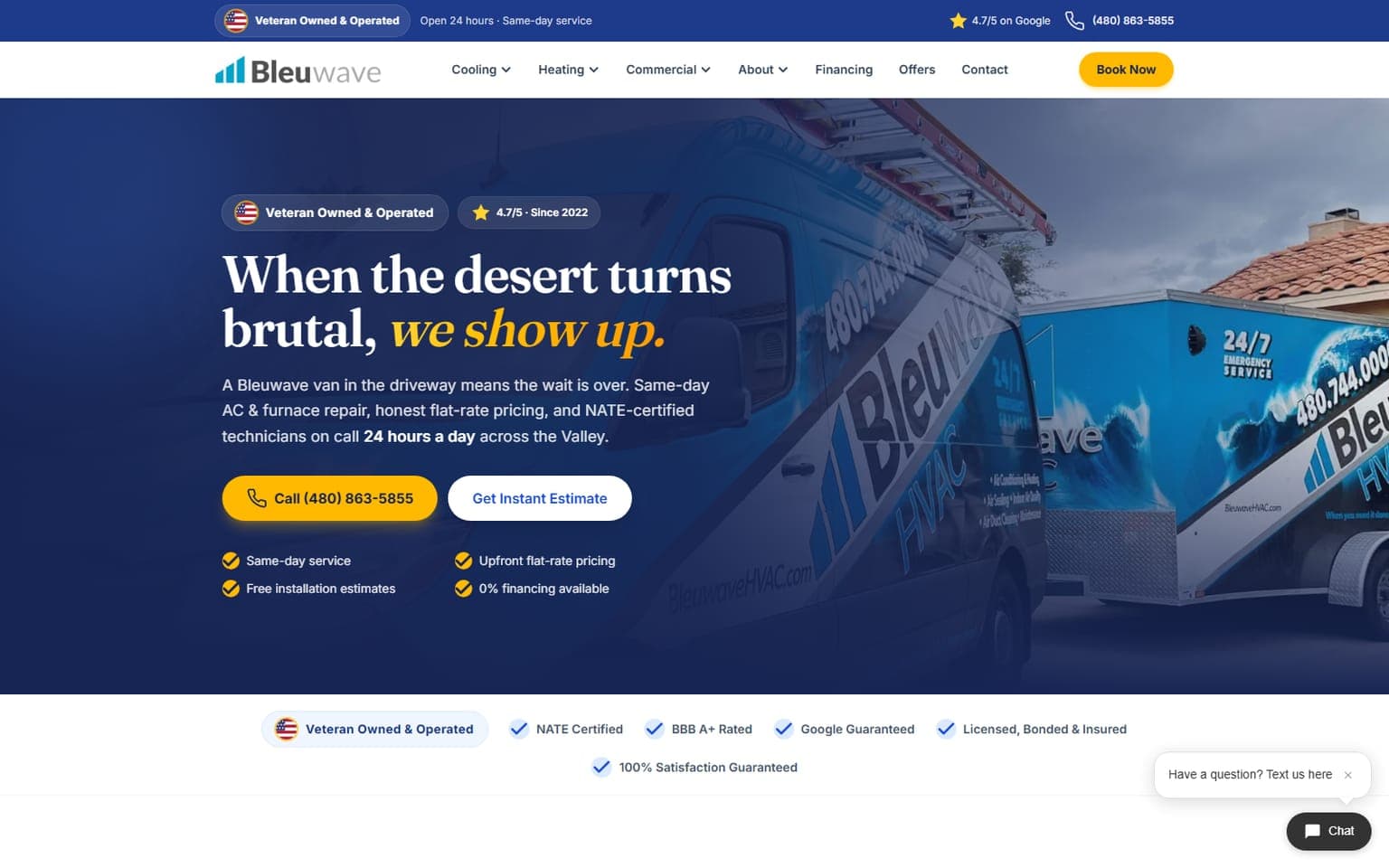
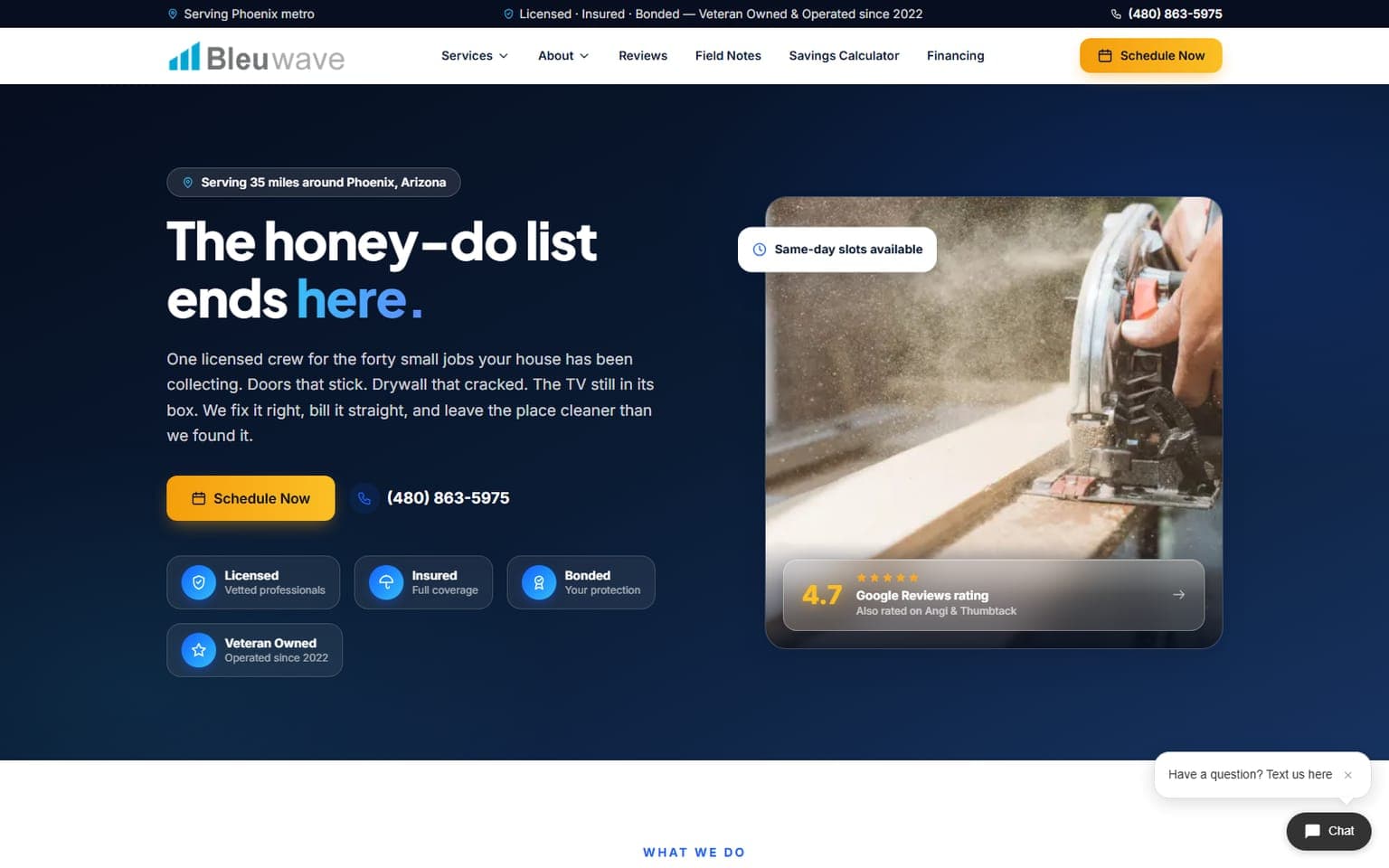
The same build sits inside a larger family: see the Bleuwave Home Services case study for the main site and the sister trades, and the Bleuwave HVAC case study for the instant estimate on the AC side. If you run a plumbing company in San Antonio, check your current site with the website grader, or read how San Antonio contractors keep the dispatch board full.